Looking for basement apartment ideas that feel bright, cozy, and easy to live in? A finished basement can become a comfortable home when you plan the layout, lighting, and storage from the start.
In this guide, you will see small-space solutions for a living area, studio zones, bedroom, kitchenette, office nook, lounge, dining corner, Scandinavian look, reading corner, and a laundry and storage zone.
Each section includes simple “how to style it” tips, plus a Pro Design Tip and a Budget Consideration so you can make smart choices with real basement limits like low ceilings, support beams, and moisture.
Use these ideas to set up a practical basement apartment that looks good in photos and works well every day.
1. Cozy Basement Apartment Living Area


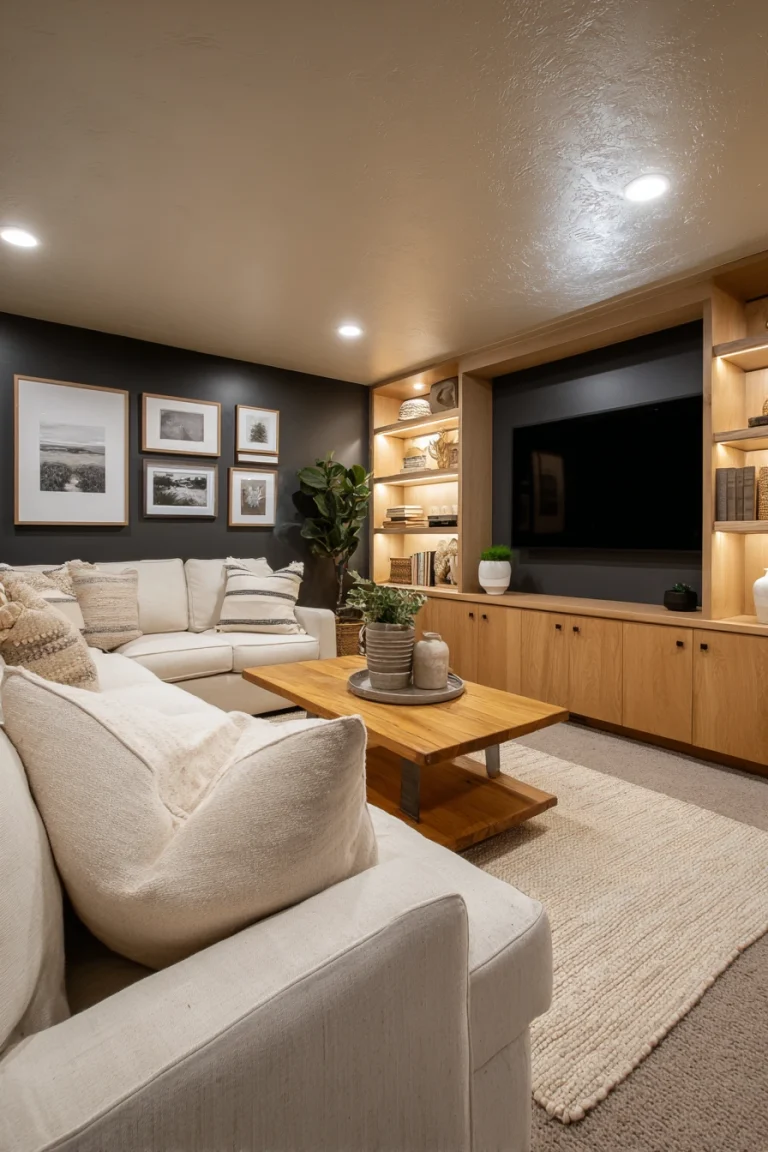
A cozy compact living area works best when every piece is low and light-looking. A low-profile beige sectional sofa keeps sight lines open, which helps a basement feel less tight. Add a textured wool area rug to soften footsteps and echo sound, then place a slim oak coffee table that is easy to walk around. If you have an exposed support beam, treat it like a design feature by painting it the same soft off-white as the walls or wrapping it in simple wood trim.
Built-in wall shelves are a strong choice for small-space living because they add storage without taking floor room. Style the shelves with a mix of books, baskets, and a few calm objects so it looks lived-in, not crowded. Warm LED floor lamps help when windows are small. Aim for soft, diffused lighting from two or three spots instead of one bright ceiling light. This makes the room feel balanced and relaxed.
To style it, keep textiles layered but simple. Try one knit throw, one textured pillow, and one smooth pillow in cream or taupe. Add one plant that does well in lower light, or use a high-quality faux plant if needed. Leave one clear path from the stairs to the seating so the layout feels easy and safe.
- Choose a sectional with slim arms to save inches
- Use nesting tables if a full coffee table feels big
- Hang one large art piece to reduce visual clutter
- Use closed baskets on shelves for cords and games
- Pick warm bulbs (2700K to 3000K) for a cozy look
Pro Design Tip: Keep the sectional and rug centered on the main wall so the room reads as one calm zone, and use matching paint on walls and beam to reduce contrast and “lower” the ceiling less.
Budget Considerations: Built-ins can be pricey; use sturdy wall-mounted shelves and matching baskets to get a similar look for less.
2. Basement Apartment Studio with Zone Separation


An open-plan basement studio needs clear zones for sleeping, dining, and relaxing. The easiest way is a shelving divider that doubles as storage. Place the divider so it blocks the view of the bed from the entry, but still lets light pass through. A compact sleeper sofa can work as daily seating and a guest bed, while your main bed area stays simple and calm.
For dining, a fold-down dining table is a smart choice in a small basement space. Mount it on a wall near the kitchenette, then use two stackable chairs or slim stools. Light gray linen curtains soften the room and help with sound. Add matte black accents in a few places, like a lamp base, picture frames, or cabinet pulls, to give the space a clean edge without making it dark.
Durable vinyl wood flooring is practical for basements because it handles moisture better than many wood options and is easy to clean. Recessed ceiling lights can brighten the whole studio, but keep them on a dimmer so the space can shift from work mode to relax mode. To style the zones, repeat two or three colors across the room, like warm gray, beige, and black, so the studio feels connected.
- Use the shelving divider for both display and hidden bins
- Place a small rug under the sofa to mark the lounge zone
- Use a wall hook rail near the door for bags and coats
- Choose curtains that reach the floor to add height
- Pick one compact table lamp for warmer evening light
Pro Design Tip: Align the divider, sofa, and table edges so they form clean lines; this makes a small basement layout feel planned and not random.
Budget Considerations: If a custom divider is too much, use an open IKEA-style shelf unit and add fabric bins for a built-in look at a lower cost.
3. Warm Neutral Basement Apartment Bedroom


A small basement bedroom feels best when the bed sits low and the colors stay soft. A low platform bed helps with realistic basement ceiling height and keeps the room from feeling top-heavy. Layer taupe and cream bedding for a calm look, and choose an upholstered headboard to add comfort and reduce noise. Moisture-safe painted walls are important, so use a basement-rated primer and a washable interior paint finish.
Floating bedside shelves are a great swap for nightstands because they open floor space and are easier to clean around. Wall sconces give light without using table space, and they help the bed area feel like a real bedroom, not a spare corner. Add one oversized framed art piece above the bed to create a focal point. One large piece often looks cleaner than several small frames in a tight room.
To style it, keep the textiles natural and slightly varied. Mix a smooth cotton sheet, a quilted coverlet, and one knit throw. Use two pillow sizes max so the bed is easy to make. If the room has one small window, hang curtains wide so they stack back and show more glass. Place a slim hamper and a small tray on a shelf for daily items so the room stays tidy.
- Pick a platform bed with under-bed drawers if possible
- Use plug-in sconces to avoid hardwiring
- Choose art with light tones to lift the wall
- Add a small rug beside the bed for warmth
- Use a dehumidifier if the room feels damp
Pro Design Tip: Mount sconces slightly higher than usual so the light spreads wider and makes the ceiling feel taller.
Budget Considerations: An upholstered headboard can be expensive; try a DIY foam-and-fabric panel or a secondhand headboard re-covered with durable fabric.
4. Modern Basement Apartment Kitchenette


A compact basement apartment kitchenette should be clean, bright, and easy to maintain. Flat-panel cabinets in matte white reflect light and keep the look simple. A quartz countertop adds durability for daily cooking, and it wipes clean fast. For the wall, a classic subway tile backsplash protects from splashes and helps the kitchenette look finished, even if the space is small.
Under-cabinet lighting is key in a basement because it removes shadows on the counter. Pair it with a few recessed ceiling lights for even coverage. Stainless steel appliances fit many styles and are easy to match over time if you upgrade. Open shelving for everyday dishes can save cabinet space, but keep it tidy. Use matching plates, clear glasses, and two or three jars for pantry staples so it looks neat.
If you have room, tuck a small breakfast nook beside the wall. A narrow table with two stools can create a spot for coffee, a quick meal, or laptop work. To style the kitchenette, bring in warmth with one wood cutting board, one small plant, and a simple runner rug that can be washed. Keep counters mostly clear so the space feels larger and more real for apartment living.
- Use slim pulls on cabinets for a modern look
- Pick a single-bowl sink to gain counter room
- Store appliances in cabinets to reduce clutter
- Use a wall rail for utensils and towels
- Add a small mirror or glossy tile to bounce light
Pro Design Tip: Run the same cabinet and counter materials to the end of the wall, even if the last section is shallow, to make the kitchenette look longer and more built-in.
Budget Considerations: Quartz can raise costs; consider a good-quality laminate with a simple edge and spend more on lighting, which changes the feel most.
5. Basement Apartment Home Office Nook


A basement apartment home office nook can work well when it stays compact and organized. Start with a slim wood desk that fits your wall length and leaves space to move your chair back. An ergonomic chair matters, even in a small setup, because comfort affects how long you can work. Add a neutral rug under the desk to soften sound and make the nook feel like its own place.
Built-in storage cubbies are great for papers, tech, and supplies. If you cannot build them, use cube shelves with bins. A pegboard organizer keeps tools, cords, and small items off the desk. Add a task lamp with an adjustable arm so you can aim light where you need it, especially if the basement has limited daylight. Sound-softening curtains can also help if the office is near a laundry area or a TV lounge.
For styling, keep the wall simple and useful. Hang one calendar or one framed print, then let the pegboard do the work. Use matching containers for pens and chargers to reduce visual noise. Cable management should look realistic: route cords down one leg of the desk, use adhesive clips, and hide the power strip in a basket. This makes the nook photo-ready and easier to clean.
- Mount a power strip under the desk to reduce cable mess
- Use a small shelf above the monitor for extra storage
- Choose closed bins for paperwork you do not want to see
- Add a small corkboard for notes if you prefer paper
- Place a floor plant or tall vase to soften corners
Pro Design Tip: Keep the desk facing into the room if possible, then place storage behind you; it looks better on video calls and helps you stay focused.
Budget Considerations: If an ergonomic chair is costly, buy a used one and replace the casters or add a new seat cushion for comfort.
6. Basement Apartment Entertainment Lounge


A basement entertainment lounge is ideal because it is naturally darker and quieter, but it still needs smart lighting and sound control. A wall-mounted TV saves floor space and keeps the setup clean. Pair it with a low media console to hold devices while keeping the wall area open. A modular sofa is practical because you can change the seating shape for guests or daily lounging.
Basements can echo, so add acoustic wall panels disguised as decor. You can use fabric-wrapped panels in neutral colors, or even large soft wall art pieces. A textured rug also helps absorb sound and makes the room feel warm. Use plush throw blankets and a few pillows for comfort, but keep the palette simple so it does not look messy. Warm dimmable lighting is important. Use a mix of a floor lamp, a table lamp, and wall sconces if you can.
To style the lounge, keep the media wall balanced. Place two small objects on the console, like a tray and a plant, and hide the rest in drawers. Add a side table for drinks so people do not set cups on the console. If you notice glare on the screen, shift lamps to the side and choose bulbs with warm color. The goal is a polished but livable atmosphere that works in real basement proportions.
- Use blackout curtains if the lounge has a small window well
- Add a dimmer switch for recessed lights
- Hide cables with paintable cord covers
- Use a large rug to anchor the seating area
- Choose a sofa with washable covers for easy care
Pro Design Tip: Place soft materials on at least two surfaces (rug plus curtains, or rug plus panels) to cut echo without making the room feel heavy.
Budget Considerations: Acoustic panels can be expensive; DIY fabric panels with mineral wool or thick moving blankets behind a frame can save money.
7. Small Basement Apartment Dining Corner


A small basement apartment dining corner can feel welcoming when the furniture matches the scale of the room. A round pedestal table is a smart pick because it is easy to walk around and has no sharp corners. Four compact upholstered chairs add comfort, but choose slimmer frames so the set does not look crowded. Warm wood tones help the space feel less like a basement and more like a main-level dining spot.
Because ceiling height is often lower, use a pendant light hung low, but not too low. Make sure it clears heads when people stand up. A dimmable bulb lets you set a softer mood at dinner. Add a slim buffet cabinet for dishes, napkins, and extra pantry items. This keeps the kitchenette from overflowing. Choose durable finishes for the table and cabinet so they hold up to daily use.
For styling, keep tableware simple and real. A small bowl, two placemats, and a carafe can look tidy without trying too hard. Hang framed prints at eye level to pull attention away from the ceiling. If you have a tight layout, keep one side of the dining corner clear so chairs can slide out. A small runner rug can work, but only if it is flat and easy to vacuum.
- Pick a table that is 36 to 42 inches wide for small rooms
- Use chairs that tuck in fully to save space
- Choose a pendant with a shade to reduce glare
- Add a tray on the buffet for keys and mail if needed
- Use wall hooks nearby for bags or aprons
Pro Design Tip: Center the pendant over the table and keep the table centered with the art wall so the corner feels intentional, even in a tight basement space.
Budget Considerations: Upholstered chairs can add up; mix two upholstered chairs with two wood chairs in the same tone to lower the total cost.
8. Basement Apartment with Scandinavian Style


A Scandinavian-inspired basement apartment is a strong choice when you want a bright, calm space. White walls help bounce light, and pale oak furniture adds warmth without making the room feel heavy. A soft gray sofa keeps the main seating neutral and easy to style. Add knitted throws and a few textured pillows to bring in comfort without clutter.
Basements often have small egress windows, so use blinds that filter light instead of blocking it. This keeps privacy while letting daylight in. Clean lines and functional storage are key to this style. Choose a media console with closed doors, a storage bench near the entry, and a simple shelf for books. Minimalist wall art works best when it has breathing room. Use fewer pieces, larger sizes, and simple frames.
To style the room, focus on natural textures. Add a woven basket, a light wood tray, and a simple ceramic vase. Keep the color palette tight: white, gray, oak, and one accent color like muted sage. If the basement feels cold, use a layered rug setup: a flat woven rug under a softer area rug. Keep surfaces mostly clear so the space stays cozy but uncluttered.
- Use warm white bulbs so the room does not feel blue
- Choose furniture with legs to show more floor
- Add one large mirror to reflect window light
- Use storage baskets that match the wall color
- Keep cords hidden to maintain the clean look
Pro Design Tip: Repeat pale oak in at least three spots (table, shelf, frames) to make the room feel consistent and more expensive.
Budget Considerations: Solid oak can be costly; use oak veneer or light wood-look pieces and spend on a good rug, which adds comfort and style fast.
9. Basement Apartment Reading Corner


A cozy basement apartment reading corner is a simple way to add comfort without needing a full extra room. Place it near the window well or any spot with the best natural light. Start with a comfortable accent chair that supports your back. Add a small side table that holds a drink and a book without wobbling. A floor lamp with a warm bulb is important for evenings, since basement light can be limited.
Built-in bookshelf space is great if you have it, but a tall narrow bookcase also works. A layered rug setup adds warmth underfoot and reduces noise. Use soft curtains to make the corner feel private and calm. An earth-tone palette, like tan, clay, olive, and cream, fits well in basements because it looks warm even under artificial light. Add realistic textures, like a linen pillow and a wool throw, so the space feels lived-in.
To style it, keep the corner simple and useful. Put three to five favorite books on the table or shelf, not the whole collection. Add one small plant, a framed photo, or a candle with a lid. If you want the chair to look inviting in photos, drape the throw diagonally and place a pillow at the lower back. Make sure there is a clear walking path so the corner feels like part of the apartment, not an afterthought.
- Use a lamp shade to soften light and reduce glare
- Pick a chair with a small footprint but wide seat
- Add a small ottoman if you have the space
- Use a basket for extra blankets and magazines
- Hang art slightly lower to suit basement ceilings
Pro Design Tip: Angle the chair about 15 degrees toward the light source so the corner looks open and feels better for reading.
Budget Considerations: If a new accent chair is too much, look for a used chair and update it with a washable slipcover and a new pillow.
10. Basement Apartment Laundry and Storage Area


An organized basement apartment laundry and storage area makes the whole home feel easier to manage. Start with a stacked washer and dryer if space is tight. This opens room for shelving and a folding station. Add open shelving for baskets and detergents, but balance it with closed cabinets so the area does not look busy. Keep daily items within reach and store backup supplies higher up.
A countertop folding station is a game changer. Even a simple laminate counter over base cabinets can work. Use labeled bins for sorting and for seasonal items like extra blankets. Moisture-resistant flooring is important in a utility zone, so pick vinyl tile, sealed concrete, or another basement-safe option. Bright task lighting helps you see stains and makes the area look clean in photos and in real life.
To style this space, treat it like a small workroom. Use matching baskets, one or two simple hooks for hang-dry items, and a slim drying rack that folds away. Keep the color palette light so the area feels fresh. If you store tools here too, place them in a closed tote so the shelves still look tidy. A small rug can help, but choose one that is washable and does not trap moisture.
- Use clear containers for small supplies like pods and clips
- Install a hanging rod for shirts and delicates
- Add a lint bin and keep it near the dryer
- Use shelf liners to protect from spills
- Keep a small dehumidifier nearby if needed
Pro Design Tip: Create three zones: wash, fold, and store; when each zone has its own shelf or bin, the area stays clean with less effort.
Budget Considerations: Custom cabinets can be expensive; start with strong wire shelving and matching labeled bins, then upgrade to doors later when the budget allows.
Conclusion
Good basement apartment ideas focus on comfort, storage, and lighting first, then style. When you keep furniture low, choose moisture-safe materials, and use layered light, a basement can feel like a real apartment.
Use the sections above to plan each zone step by step, from a cozy living area to a clean laundry setup. Small choices like rugs, curtains, and smart shelves can make a big difference.
FAQ
1) How do I make a basement apartment feel brighter?
Use light wall paint, warm bulbs, mirrors, and sheer or light-filtering window treatments. Add more than one lamp so light is even.
2) What flooring is best for a basement apartment?
Vinyl plank, vinyl tile, and sealed concrete are common choices because they handle moisture and are easy to clean.
3) How do I deal with low ceilings in a basement?
Choose low-profile furniture, hang curtains high and wide, use flush or recessed lights, and keep wall decor simple and larger scale.
4) How can I reduce basement noise and echo?
Add rugs, curtains, upholstered seating, and soft wall decor. Acoustic panels can help in TV areas.
5) What is the easiest way to create zones in a basement studio?
Use a shelving divider, rugs, and lighting changes. Keep walking paths clear so the space feels open.
6) How do I keep a small kitchenette from looking cluttered?
Store small appliances in cabinets, limit countertop items, use under-cabinet lighting, and keep open shelves matched and minimal.
7) What should I do about moisture in a basement apartment?
Use a dehumidifier if needed, choose moisture-safe paint and flooring, and keep furniture slightly off damp-prone walls.
With a practical layout and a few simple styling moves, your basement apartment can feel warm, organized, and easy to live in.