Basement playroom ideas can turn extra space into a kid-friendly room that is easy to clean and easy to organize.
This guide shares simple layouts, storage plans, and styling choices that work well in basements, including durable vinyl plank flooring, carpet tiles, and soft recessed lighting.
You will get clear tips for toy storage, reading corners, craft stations, and active play zones, plus small details that make the room feel calm and lived-in.
Each section matches a specific playroom look so you can copy the setup, adjust it to your space, and keep it practical for daily family life.
1. Cozy family basement playroom


This cozy basement playroom idea starts with a soft neutral sectional that fits the whole family. Pair it with a washable area rug with a playful geometric pattern so spills and crumbs are not a big deal. In a basement, comfort matters, but so does cleanup, so choose durable vinyl plank flooring under the rug for a surface that can handle ride-on toys and art mess.
Keep toys easy to grab and easy to put away by using low toy storage cubes along one wall. Place the bins where kids can reach them without climbing. Add a small reading corner with beanbags near the warm recessed lighting, and keep a small basket of board books right next to it. If you have an exposed basement beam, painting it white helps the ceiling feel brighter and less heavy.
To style it, use two or three warm neutral throw pillows, then add one accent color in the rug or book covers. Stick to soft diffused lighting so the space feels calm for play and movie time. A wide-angle layout works best when you keep the center of the room open for building blocks and pretend play.
- Choose a sectional with removable, washable covers if possible.
- Use labeled cube bins for quick cleanups before bedtime.
- Pick a rug that can go in the washing machine or be spot cleaned.
- Keep one small tray on the ottoman for puzzles or card games.
- Use wall hooks for dress-up capes and small backpacks.
Pro Design Tip: Use a rug pad under the washable rug to reduce slipping and add sound control on basement floors.
Budget Considerations: Vinyl plank is usually cheaper than hardwood; if you already have concrete, start with a large washable rug and add flooring later.
2. Modern basement playroom with built-in storage


This modern basement playroom idea is all about a clean storage wall that keeps clutter off the floor. Matte white cabinetry with wood accents looks simple and bright, even in a basement with limited daylight. Use labeled bins for toys, blocks, and craft kits so kids can learn where things go. The key is making the storage the main feature, then keeping the rest of the room light and open.
For play, add a compact climbing triangle and a kid-sized table and chairs for snacks, drawing, or building sets. A soft blue and beige color palette helps the room feel calm without looking plain. Sound-dampening wall panels are a smart upgrade in a basement because they cut echo and make the space nicer for the rest of the house.
Use durable carpet tiles for the floor so you can replace one square if it gets stained. Style the shelves with a few books facing forward, one small plant on a high shelf, and matching baskets for odd-shaped toys. Keep the layout practical by leaving a clear path from the stairs to the main seating spot.
- Group bins by activity: art, cars, dolls, and games.
- Use picture labels for younger kids who cannot read yet.
- Keep a small “rotation bin” to swap toys every few weeks.
- Place the climbing triangle away from cabinets to avoid bumps.
- Add a small floor cushion by the table for extra seating.
Pro Design Tip: Plan one cabinet section for future needs, like school supplies, sports gear, or a Lego bin that will grow over time.
Budget Considerations: Custom built-ins cost more; to save, combine ready-made cabinets with open shelves and matching bin fronts.
3. Basement playroom with media and games zone


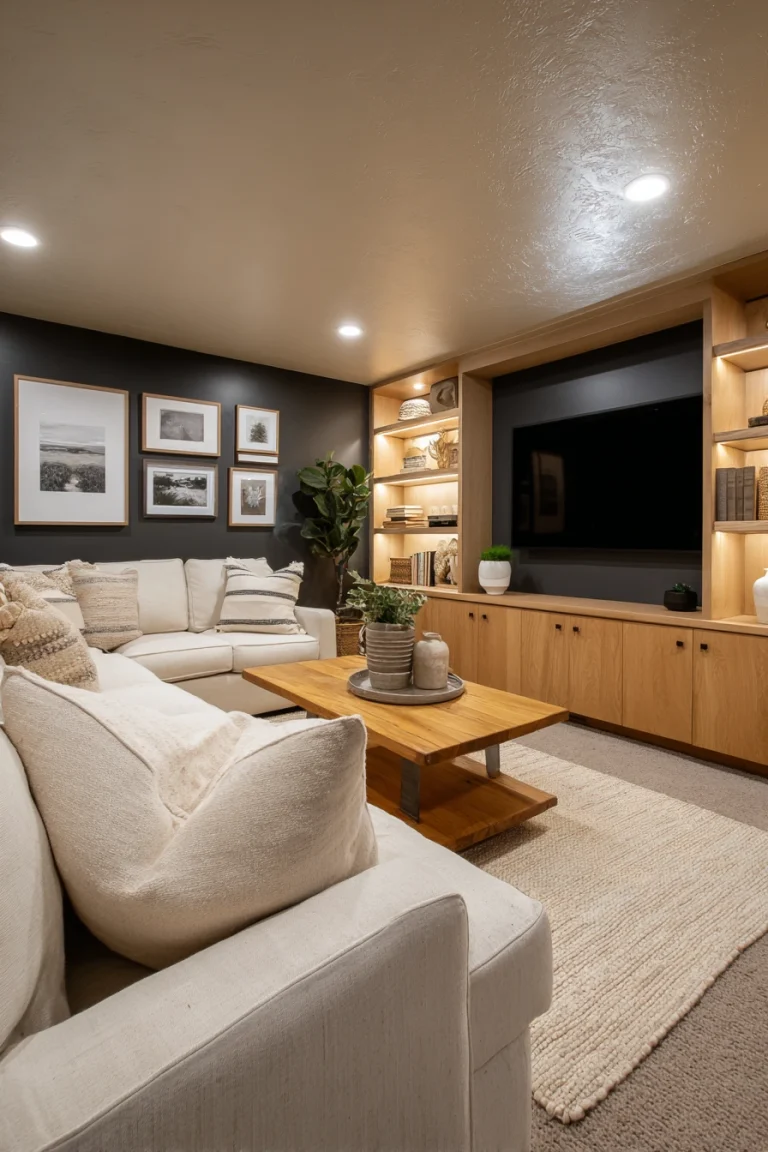
A combined play and media zone works well when the basement is your family hangout spot. Start with a low-profile sectional facing a wall-mounted television, then leave a second area for toys and hands-on play. This layout makes it easy to switch from cartoons to board games without dragging furniture around. A few cushioned floor poufs add flexible seating for kids and adults.
Balance a darker media wall with warm wood shelving so the room does not feel like a cave. Use the shelving for storage for board games and toys, and keep the prettiest items in baskets on the lower shelves. Add a puzzle table or small game table near the seating so pieces do not end up on the floor. Cozy ambient lighting is important in basements, so mix a dimmable overhead light with a lamp on a side table.
For styling, keep cords hidden and use a simple wall color that works with screens, like a soft greige. Pick basement-friendly finishes like wipeable paint, sturdy shelving, and a rug that can handle snack time. Keep one lidded bin nearby for quick cleanup when guests come over.
- Use a media console with doors to hide controllers and chargers.
- Store board games upright like books to save space.
- Add a tray for remotes so they stay in one spot.
- Choose poufs with removable covers for easy washing.
- Keep a small basket for blankets to make movie time cozy.
Pro Design Tip: Mount the TV slightly lower than in a living room so kids can watch comfortably from floor poufs and low seating.
Budget Considerations: If a full shelving wall is too costly, use two tall bookcases with baskets and add inexpensive LED strip lighting for warmth.
4. Scandinavian basement playroom design


A Scandinavian-style basement playroom feels bright, calm, and easy to maintain. Use white walls and light oak furniture to reflect light, especially if the only natural light is from a small window well. A soft grey rug helps define the play area while keeping the look simple. The goal is an uncluttered layout where each toy has a home.
Choose minimalist toy storage like low open shelves with a few woven baskets. Add a simple wooden play kitchen as a main play feature, then keep the rest of the toys in rotating bins so the room stays tidy. Warm LED ceiling lights help the space feel inviting, and a single floor lamp near the seating adds a softer glow for quiet play.
To style it, keep colors limited. Use natural textures like wood, cotton, and woven baskets, then add one small pop of color in a book cover or art print. Keep the center of the room open for building and pretend play. In a basement, this clean setup also makes it easier to spot dust and keep floors wiped down.
- Pick a few baskets in the same size for a tidy shelf look.
- Store tiny toys in lidded boxes to reduce visual clutter.
- Use wall hooks for dress-up items and toy aprons.
- Keep the play kitchen near storage for food toys and dishes.
- Add a small mirror at kid height for play and light bounce.
Pro Design Tip: Use closed storage for half the toys and open storage for the daily favorites to keep the room calm but still kid-friendly.
Budget Considerations: Light oak pieces can be pricey; look for birch or pine furniture and use a clear matte finish for a similar look.
5 .Colorful kids basement playroom


If you want color without chaos, start with a neutral base and add muted mustard, sage, and dusty blue accessories. This basement playroom idea uses small accents so the room still feels grown-up when toys are put away. Foam floor mats in a playful layout create a soft spot for toddlers and help in basements where floors can feel cold.
Add a modular storage bench for shoes, bins, and a quick place to sit. Then set up a creative activity table with a wipeable top for crafts, sticker books, and building sets. A kid-sized art display makes the space feel personal and keeps papers off the floor. Use durable and easy-clean surfaces like washable wall paint and storage that can be wiped with a damp cloth.
To style it, repeat each accent color two or three times across the room, such as one pillow, one basket, and one piece of wall art. Keep the largest items neutral, like the bench and shelves, so you can change the colors later. In realistic basement proportions, this approach makes the room feel open instead of crowded.
- Use magnetic frames or clip rails for an easy art wall.
- Keep foam tiles in one zone so the room looks organized.
- Choose stackable bins inside the storage bench for sorting.
- Use a plastic tray on the craft table for markers and glue sticks.
- Add a small lidded trash can for paper scraps.
Pro Design Tip: Pick one “hero” wall for art display and keep the other walls quiet to avoid a busy look in a low-ceiling basement.
Budget Considerations: Foam mats and clip rails are low-cost upgrades; if funds are tight, paint one small section with washable paint and add color through textiles.
6. Basement playroom with reading nook


A dedicated reading nook makes a basement playroom feel warm and useful, especially on rainy days. Start with a built-in bench with cushions along one wall. The bench gives kids a clear place to sit, and it doubles as a landing spot for backpacks or a parent who wants to supervise. Tuck toy storage beneath the seating so the floor stays open.
Add wall-mounted bookshelves at kid height so children can see covers and choose books without help. A soft floor lamp adds gentle light, which is helpful when recessed lights feel too bright. Place a plush rug in front of the bench to make the corner feel special and to reduce noise in the basement.
For styling, use warm beige and oak materials to keep the nook cozy and consistent with the rest of the room. Choose cushion covers in durable fabric with a little texture so they hide wear. Add one small throw blanket in a neutral color, and keep a basket for library books so returns do not get lost in the toy bins.
- Use under-bench bins for stuffed animals and puzzles.
- Keep a small book caddy for current favorites.
- Add a timer lamp or dimmer for calmer evening reading.
- Use corner guards if the bench has sharp edges.
- Hang one simple print above the bench to finish the wall.
Pro Design Tip: Build the bench depth deep enough for lounging, then add a narrow ledge behind the cushions for a drink or nightlight.
Budget Considerations: A built-in can be expensive; you can mimic it with two low cabinets side by side, a plywood top, and a foam cushion cut to size.
7. Small basement playroom for compact homes


Small basement playroom ideas work best when you split the room into clear zones. Create one cozy rug zone for quiet play and one activity zone for crafts or building. In a compact room with a low ceiling, this simple layout helps everything feel less crowded. Choose practical furniture scaled for the space, like a slim storage cabinet and a foldable play table.
Use space-saving wall shelves to get storage off the floor. Keep stackable toys in bins that fit the cabinet, and avoid wide toy chests that eat up walking space. A bright but soft color palette, like warm white with light blue or sandy beige, helps the basement feel lighter without being harsh. Stick to soft diffused light and add a small lamp to reduce shadows in corners.
To style it, keep the number of decor items low. Choose one large wall art piece or a simple kids’ print set, then let the toys add personality. Use matching containers so the room looks calm even when the shelves are full. If you have to share the basement with laundry or storage, a curtain or simple screen can hide the busy area.
- Pick a foldable table that can slide behind a sofa or cabinet.
- Use wall rails with hooks for headphones, dress-up, and bags.
- Store big toys on the bottom shelf to prevent tipping.
- Keep a small rolling cart for art supplies and move it as needed.
- Use a narrow bench for seating without blocking pathways.
Pro Design Tip: Leave at least one clear wall and one clear floor path so the space feels larger and kids can move safely.
Budget Considerations: Modular shelves and flat-pack cabinets are budget friendly; add nicer baskets later as you find the right sizes.
8. Basement playroom with craft area


A dedicated craft station keeps art mess in one place and makes it easier to say yes to creative time. Start with a durable round table that has no sharp corners, plus child-safe chairs that can be wiped clean. In a basement, choose washable wall paint so you can remove marker spots and fingerprints without stressing.
Organized drawers for art supplies are the real helper here. Keep crayons, markers, scissors, and glue in separate sections so kids can find what they need. Add open shelving with baskets for bigger items like paper pads, coloring books, and craft kits. A corkboard display wall for kids’ artwork makes the room feel personal and reduces piles on counters.
To style it, keep the craft colors contained in the station area. Use matching jars or cups for pencils and brushes. Add warm overhead lighting directly above the table so kids can see clearly. Put a small drop cloth or wipeable mat under the table if you worry about paint or glitter. This setup feels detailed and functional, but still realistic for a family basement.
- Use a label maker or picture labels for each drawer.
- Store paper upright in magazine files to prevent bending.
- Keep a “one project at a time” tray to control clutter.
- Hang a small drying rack or use clips for wet paintings.
- Add a timer to remind kids when cleanup starts.
Pro Design Tip: Install a narrow shelf above the corkboard for display items so artwork can rotate without damaging walls.
Budget Considerations: A corkboard wall can be made with large cork tiles; for a cheaper option, use a single framed corkboard and expand later.
9. Farmhouse basement playroom


Modern farmhouse basement playroom ideas mix cozy textures with simple organization. Start with a shiplap accent wall to add detail without needing lots of decor. A reclaimed wood storage bench brings warmth and doubles as seating. Use neutral linen cushions so the bench is comfortable and easy to refresh with a quick cover change.
For toys, keep it simple with baskets and clear labels. Black metal basket labels look neat and help kids learn where things go. Add a vintage-inspired play rug to soften the floor and define the play area. Warm cream and oak tones make basements feel less chilly, especially if you add layered textures like a knit pouf or a soft throw.
To style it, choose a few farmhouse-style touches that also work for kids, like a peg rail for dress-up, a framed alphabet print, or a small wall clock for routine. Keep the storage bench near the main play zone so cleanup is fast. If you want a little patina, use wood that can handle scuffs so you do not worry about every mark.
- Use baskets with handles so kids can carry toys to the rug.
- Keep one large bin for big toys and five smaller ones for categories.
- Choose washable cushion covers in light colors.
- Add a small side table for a nightlight and water bottle.
- Use command hooks for a no-drill peg rail look.
Pro Design Tip: Combine open baskets for daily toys with one hidden cabinet for the “messy” items like train tracks and dress-up pieces.
Budget Considerations: Reclaimed wood can vary in price; if you are on a budget, use a stained pine bench and add metal label holders for the farmhouse feel.
10. Basement playroom with indoor active play zone


An indoor active play zone is a smart basement playroom idea when kids need to burn energy year-round. Start with soft foam floor tiles to protect little knees and reduce noise. Create an open space layout with clear circulation so kids can move without tripping over furniture. In a low ceiling basement, keep climbing and jumping areas low and well padded.
Add a compact climbing wall for kids on one sturdy wall, then place a tunnel and balance beam in the center as moveable pieces. A padded storage ottoman gives you a soft seat and a place to hide smaller equipment. Choose durable surfaces and safe corners, and keep a simple first-aid kit in a top cabinet for peace of mind.
To style it, keep wall decor minimal so the area feels like a mini gym. Use one or two colors for the foam tiles and accessories so it looks tidy. Practical lighting matters here, so use bright overhead lights plus a dimmer if you also use the space for calmer play later. Store equipment vertically on wall hooks so the floor can be cleared fast.
- Place the climbing wall away from doors and furniture edges.
- Use corner guards on nearby trim and posts.
- Keep one open bin for quick toss-in cleanup.
- Rotate active toys so the floor space stays usable.
- Mark a “no toy” path to the stairs for safety.
Pro Design Tip: Use a thick crash pad or gym mat under climbing features and anchor equipment properly to studs for safe daily use.
Budget Considerations: Climbing walls can add up; start with a balance beam and tunnel, then add a small wall panel with a few holds later.
Conclusion
These basement playroom ideas focus on practical layouts, easy storage, and finishes that hold up to real life.
Pick one main goal for your space, like a reading nook, craft station, or active play zone, then build around it with simple furniture and labeled bins.
When the room is easy to clean and easy to reset, kids use it more and parents feel less stress.
FAQ
What is the best flooring for a basement playroom?
Durable vinyl plank, carpet tiles, and foam mats are popular because they handle moisture changes and are easier to clean than wall-to-wall carpet.
How do I make a basement playroom feel brighter?
Use light wall colors, warm LED lighting, and mirrors or light wood furniture to reflect light.
How can I reduce noise from a basement playroom?
Add rugs, rug pads, soft seating, and sound-dampening wall panels to cut echo.
What storage works best for kids?
Low cubes, labeled bins, and baskets at kid height make it easier for children to put toys away.
How do I set up a playroom in a small basement?
Create two zones, keep the center open, use wall shelves, and choose foldable or slim furniture.
How do I keep crafts from taking over the room?
Use drawers with labels, a project tray, a corkboard display, and a regular cleanup routine.