Cozy basement ideas can turn a dark, underused space into the best room in the house. With the right lighting, soft textures, and smart storage, a finished basement can feel warm and easy to live in.
This guide walks through 10 real-life basement setups, from a family lounge and reading nook to a home theater, guest space, and playroom. Each section includes simple styling steps you can copy, even with limited daylight and low ceilings.
You will also find practical layout tips for built-in media walls, layered rugs for sound, and storage that hides clutter. Use these ideas to plan a basement that looks good in photos and works well every day.
Near the end, there is a quick FAQ to help you pick paint colors, lighting, and budget-friendly upgrades. Start with one corner, then build the cozy feel over time.
1. Cozy Basement Family Lounge


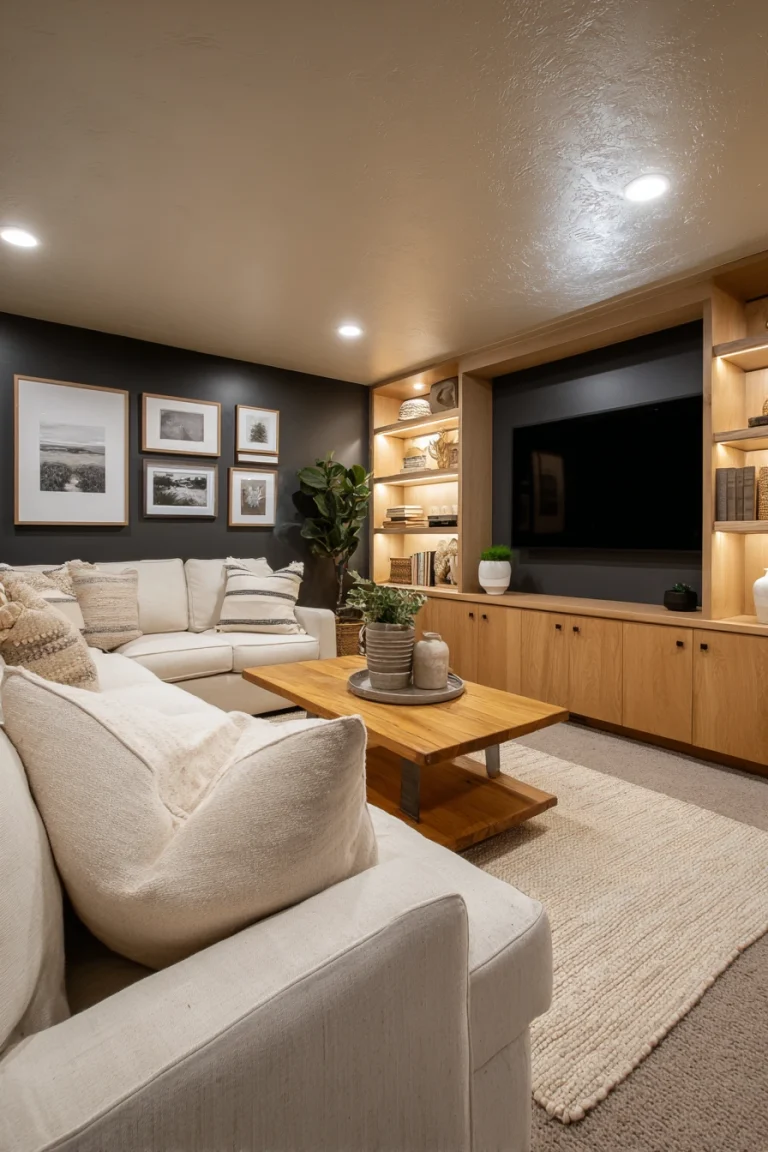
A practical family lounge is one of the easiest cozy basement ideas because it solves a real need: a place to relax together. Start with a plush sectional sofa sized to the room, leaving a clear walkway to stairs and doors. Layer neutral throw pillows in warm beige, taupe, and soft gray so the seating looks inviting without feeling busy.
Basements often have limited daylight, so plan the room around the built-in media wall. Use discreet storage in closed cabinets for games, blankets, and chargers. Painted drywall in soft taupe and warm gray helps bounce light, and warm recessed ceiling lights keep the space bright without glare on the screen.
To finish the look, add a soft wool area rug and a pair of small side tables in natural oak. If you have small basement windows, treat them gently with light-filtering shades so you get privacy but still keep any natural light. Keep a basket near the sofa for throws, and use one tray for remotes so the room stays tidy.
- Place the sectional so the longest side faces the media wall and the chaise does not block traffic.
- Choose a wool or wool-blend rug for softness, then add a thin rug pad to reduce echo.
- Use built-in drawers and doors to hide toys, cables, and extra pillows.
- Add two table lamps or sconces on dimmers to soften recessed lighting at night.
- Style the media wall with a few matte objects and books, leaving open space for calm.
Pro Design Tip: Use three lighting layers in a basement lounge: recessed lights for general light, lamp light for cozy glow, and a dim backlight behind the TV to reduce eye strain.
Budget Considerations: Built-in media walls can be pricey; save money with ready-made cabinets and a simple wood top, then add doors or baskets to keep storage looking clean.
2. Cozy Basement Reading Nook


A quiet reading nook is a smart cozy basement idea when you do not have space for a whole extra room. Pick a basement corner and anchor it with a deep upholstered armchair. Add a textured knit blanket and a compact ottoman so the spot feels like a true break area, not just a chair in a corner.
Lighting matters most here. Use a floor lamp with a warm bulb, and aim the shade down toward the pages. If the ceiling is low, painted white beams can make it feel taller and brighter. Acoustic wall panels disguised as fabric art help soften sound, which is helpful near a laundry area or a home theater.
For storage, mount a floating bookshelf in walnut veneer at arm height so books are easy to grab. Keep the styling lived-in: one small stack of books, a mug coaster, and a small plant that can handle low light. If the nook feels cold, add a small rug under the chair legs and a pillow with a soft woven texture.
- Choose a chair with arms and a higher back for long reading sessions.
- Set the floor lamp slightly behind the chair to reduce glare on the page.
- Mount a floating shelf low enough to reach while seated.
- Use fabric art panels to help with echo and make the corner feel quiet.
- Add one small side table for a drink, tissues, or a reading journal.
Pro Design Tip: Keep a reading nook calm by limiting contrast; use two main neutrals and one wood tone so the corner feels soft instead of busy.
Budget Considerations: Acoustic panels and custom shelves add cost; you can use thick curtains, a padded wall hanging, or a bookcase with fabric bins for a similar sound-softening effect.
3. Cozy Basement Home Theater


A comfortable basement home theater can feel cozy and still look practical. Start with seating first. An oversized sectional works well because it gives everyone a place to stretch out. Keep the screen wall simple with a large wall-mounted screen and a built-in cabinet below for media storage, controllers, and extra cords.
To create a cinema look without making the basement feel heavy, use a dark charcoal accent wall only on the screen side. Add blackout curtains to control light from basement windows and to reduce glare. Soft LED strip lighting under shelves or behind the cabinet gives you a low glow that is safe for walking and easy on the eyes.
Sound is a big part of comfort. Layered rugs help with sound absorption and also make the floor feel warmer. Choose a low-pile rug on top for easy vacuuming, and place a larger rug pad under it to cut echo. Keep snacks simple with a narrow console table behind the sofa or a small ottoman with a tray.
- Mount the screen at seated eye level so necks do not strain.
- Use blackout curtains in a thick fabric to help with both light and sound.
- Layer rugs and pads to reduce echo and soften footsteps.
- Add LED strip lights on a dimmer for safe, low lighting.
- Store remotes and games in labeled bins inside the built-in cabinet.
Pro Design Tip: Paint the screen wall in a matte finish; it cuts reflections and makes the picture look clearer in a basement with mixed lighting.
Budget Considerations: A full built-in can be expensive; use a long media console and add stick-on LED strips and curtain panels to get the same cozy theater mood for less.
4. Cozy Basement Guest Retreat


A welcoming basement guest retreat helps visitors feel comfortable, even if the space has a window well and limited light. Start with a queen bed and an upholstered headboard to make the room feel soft. Choose linen bedding in warm beige tones and add one extra blanket folded at the foot for warmth.
Keep the layout calm and functional. Use compact nightstands with drawers, and install reading sconces so guests can read without taking up table space. Add a small dresser for clothing and a tray on top for keys and a phone. An area rug over durable flooring brings warmth and helps the room feel finished.
Basements sometimes have utility elements, so conceal them neatly. A simple curtain, a painted screen, or a shallow cabinet can hide pipes or panels while still keeping access easy. If daylight is coming from a window well, use a light shade that filters glare but keeps the room from feeling closed in.
- Use warm white bulbs in sconces for a relaxed feel at night.
- Pick bedding in two close shades so the room looks calm and clean.
- Add a rug large enough for feet to land on both sides of the bed.
- Hide utility items with a removable cover so access stays simple.
- Place a small mirror near the dresser to bounce light around.
Pro Design Tip: In a basement bedroom, choose one main fabric texture (like linen) and repeat it in two places, such as bedding and a curtain, for a pulled-together look.
Budget Considerations: If a new headboard is not in the budget, use a wall-mounted upholstered panel or a thick pillow headboard cover to get the same soft effect.
5. Cozy Basement Game Corner


A cozy basement game corner makes the basement feel active and family-friendly. A round wooden game table is a strong choice because it fits small spaces and keeps everyone facing each other. Add four upholstered chairs for comfort during longer games, and keep the setup tidy so it is easy to use any day of the week.
Storage is key for board games. Built-in shelving looks clean and keeps boxes from stacking on the floor. If you do not have built-ins, use cube shelves with baskets to hide smaller items like cards and dice. A durable rug under the table reduces noise and protects the floor from chair scuffs.
Lighting sets the mood. Use layered ambient lighting with a warm overhead fixture plus a small lamp on a nearby shelf. A bar cart is a simple add-on for snacks, soda, or a hot drink station. Choose warm wood tones and textured wall paint so the corner feels cozy, not like a spare area.
- Leave at least 36 inches around the table so chairs can slide out easily.
- Use felt pads on chair legs to reduce noise on basement flooring.
- Organize games by size and type, and keep favorites at eye level.
- Style a bar cart with cups, napkins, and one basket for snacks.
- Add one piece of wall art or a framed game poster for personality.
Pro Design Tip: Hang a pendant light centered over the table and put it on a dimmer so you can switch from bright gameplay to a softer hangout feel.
Budget Considerations: Custom built-ins cost more; save by using sturdy bookcases and adding matching doors or fabric bins to make storage look cleaner.
6. Cozy Basement Office Nook


A compact basement home office nook can work well when you need focus and a quiet place for calls. Start with a slim desk in light oak so it does not feel heavy in a low-ceiling basement. Pair it with an ergonomic chair that supports your back, since basement work zones often become daily spots.
Keep the walls useful but not cluttered. Floating shelves hold books and tools without taking floor space. Add pinned notes, a small calendar, and storage baskets to corral cables and paper. A soft task lamp gives direct light for work, while warm overhead lighting keeps the nook from feeling harsh.
Sound and comfort make a big difference. Acoustic treatment panels integrated into the decor can look like simple fabric art while cutting echo. Add a neutral woven rug to warm the floor and help with noise. If the basement feels dark, use warm paint colors and one lighter accent on shelves or trim to reflect light.
- Use a desk with drawers or add a slim file cabinet to prevent paper piles.
- Keep daily items on one tray so the desktop stays clear.
- Place the task lamp on the opposite side of your writing hand to reduce shadows.
- Add acoustic fabric panels behind the chair to soften sound on calls.
- Use baskets on shelves for cords, chargers, and small office supplies.
Pro Design Tip: Choose one wall for the office nook and paint it a slightly deeper warm neutral; it helps the work zone feel defined without building walls.
Budget Considerations: Acoustic panels can add up; try a thick curtain, a large cork board, or a wall of bookshelves to reduce echo at a lower cost.
7. Cozy Basement Bar and Lounge


A small basement bar and lounge creates a cozy place to host friends without taking over the whole basement. Keep the bar compact with a wood-and-stone counter and open shelving for glassware. Two upholstered stools are often enough, leaving space for walking and keeping the layout practical.
Use a deep earthy color palette to make the space feel warm. Brass accents add a soft glow and look good with wood tones. Place a cozy loveseat nearby so guests can sit away from the counter. Pendant lights with a soft glow help the bar feel like a destination, even in a basement with limited windows.
For styling, think simple and tidy. Keep a small tray for bottles, a jar for cocktail napkins, and one basket for bar tools. If the basement feels echoey, add a rug under the lounge area and fabric pillows on the loveseat. A mirror behind the bar can also bounce light and make the corner feel bigger.
- Keep counter depth comfortable, around 18 to 24 inches, for a compact footprint.
- Use closed storage for extra bottles so shelves stay uncluttered.
- Pick warm bulbs in pendants to flatter wood and brass finishes.
- Add one rug and a throw to make the loveseat area feel like a lounge.
- Store glassware by type so it is easy to grab and easy to put away.
Pro Design Tip: Mix metals carefully; use brass as the main finish, then repeat it in two more places, like shelf brackets and a small tray, for a cohesive look.
Budget Considerations: Stone counters can be costly; consider butcher block or a quality laminate with a stone look, then spend on good lighting for the biggest impact.
8. Cozy Basement Craft Room


A functional basement craft room is a great cozy basement idea because it keeps projects out of the kitchen and living room. Start with a sturdy work table that can handle cutting, sewing, and glue. Place it under the brightest light you have, then add task lighting so you can see true colors and small details.
Organization makes the room feel calm. Use a wall-mounted pegboard for tools like scissors, rulers, and tape. Add organized storage bins and a rolling cart for works in progress. Neutral cabinetry keeps the room from feeling loud, while bright but warm paint on the walls helps the space feel cheerful without glare.
Basement floors can be cold, so add a washable rug to soften the room and protect the floor from spills. Keep the styling realistic: a jar of pencils, a pin cushion, and one small basket for fabric scraps. If the basement ceiling is low, keep tall storage on one wall and leave the center open so the room feels easy to move in.
- Set up zones: one for cutting, one for sewing, and one for packing or drying.
- Label bins by project type so you can clean up fast.
- Use a rolling cart to move supplies to the table and back to storage.
- Choose a washable rug that can handle paint and thread.
- Hang pegboard hooks in a simple grid so tools look neat.
Pro Design Tip: Use clear jars and shallow bins for small items; seeing supplies at a glance makes the room easier to keep tidy and more inviting to use.
Budget Considerations: Custom cabinets cost more; start with a pegboard, a folding table, and a rolling cart, then add closed storage later when you know what you use most.
9. Cozy Basement Playroom


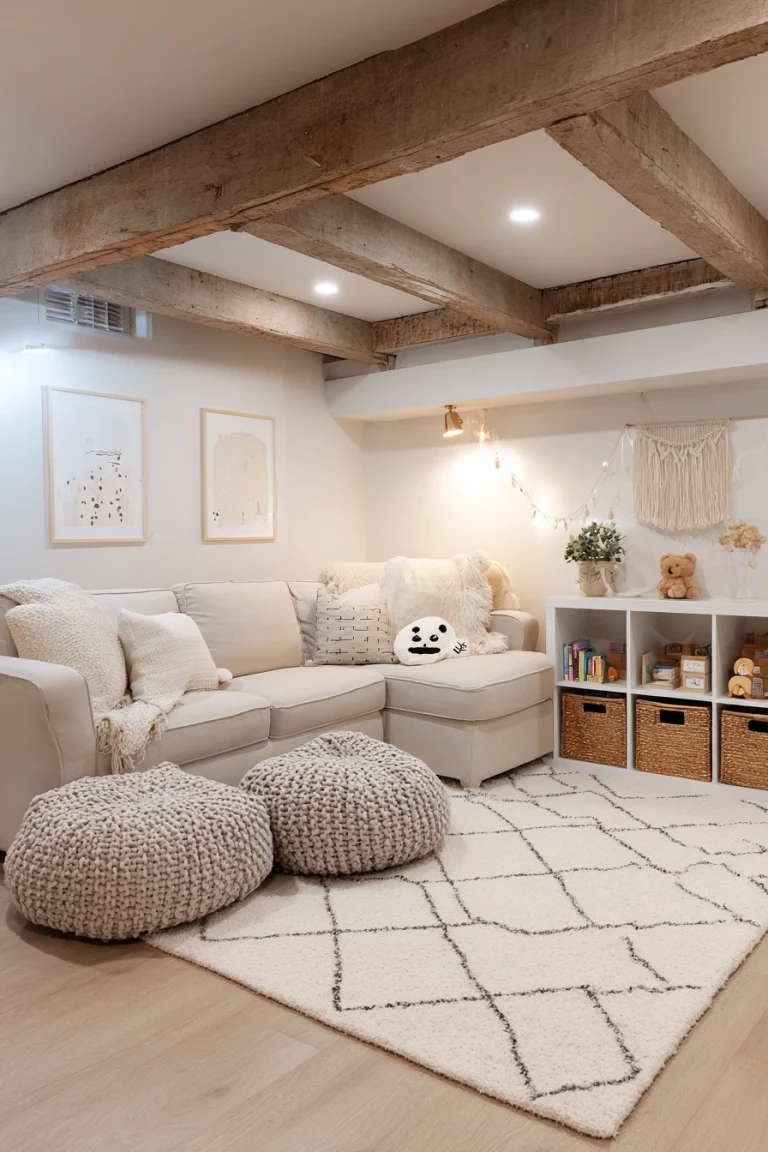
A family-friendly basement playroom can be cozy, safe, and easy to clean. Begin with soft modular seating so kids can build, read, or rest. Add toy storage baskets and low shelves so children can reach items and learn to put things away. A washable rug is important for spills and craft time.
Choose cheerful but muted colors so the playroom feels calm, not loud. Warm overhead lighting helps the basement feel welcoming, especially on cloudy days. If you have a cushioned floor zone, place it near the seating for safe tumbling. A small activity table works well for puzzles and coloring, and it can double as a snack spot.
To keep the room looking good in everyday life, plan for quick resets. Use labeled bins for categories like blocks, dolls, and art supplies. Keep one lidded basket for “random stuff” so you can tidy fast when guests come over. Add one framed print or a simple wall decal, and keep the rest of the walls open so the space does not feel crowded.
- Use low shelves that are stable and anchored for safety.
- Pick a rug that can be spot cleaned and vacuumed often.
- Create a quiet corner with books and a small lamp for wind-down time.
- Store toys in baskets by type to reduce mess and stress.
- Keep a small hamper for stuffed animals to avoid piles on the floor.
Pro Design Tip: Use a mix of open and closed storage; open shelves help kids choose toys, while baskets hide visual clutter so the basement stays cozy.
Budget Considerations: Modular seating can be expensive; start with floor cushions and a few foam mats, then upgrade to modular pieces as your kids grow.
10. Cozy Basement Music Room


A cozy basement music room is a smart way to use a quieter level of the home. Start with the main piece, like an upright piano, and give it breathing room so the area does not feel cramped. Add a comfortable accent chair for listening or for lessons, and keep sheet music on a slim stand so it stays organized.
Basements can be echoey, so acoustic wall panels disguised with fabric textures help a lot. They can look like simple art while reducing harsh sound. Warm floor lamp light adds a relaxed mood, and an area rug softens the room and protects the floor. Dark painted walls can work here, especially when balanced with warm wood accents like a small bookshelf.
Style the room with items you actually use. Keep a metronome, pencils, and extra music books on a compact shelf. Add one small side table for a drink and a phone. If the room is shared, store cables, headphones, and small instruments in a lidded basket so the space stays calm between practice sessions.
- Place the piano on an interior wall when possible to help with temperature swings.
- Use a thick rug pad to reduce sound transfer and add comfort.
- Hang fabric acoustic panels at ear height for better sound control.
- Keep lighting warm and indirect to reduce glare on sheet music.
- Store small instruments in baskets so surfaces stay clear.
Pro Design Tip: Combine sound control with decor by choosing acoustic panels in the same color family as your walls and repeating that fabric in a pillow or curtain.
Budget Considerations: Acoustic treatments can add cost; start with a rug, thick curtains, and a bookcase filled with books to help soften sound before buying panels.
Conclusion
Cozy basement ideas work best when they focus on comfort, lighting, and storage. Start by picking one function for the space, then add soft textures, warm bulbs, and a few pieces that make daily life easier.
If your basement has low ceilings or limited daylight, lean into warm paint colors, layered lighting, and rugs that reduce echo. Small upgrades like baskets, dimmers, and simple wall art can change the feel fast.
Choose one section from this list to copy, then adjust it to fit your room size and your budget. A finished basement can feel just as welcoming as the main floor when it is planned with real life in mind.
FAQ
What paint colors make a basement feel cozy?
Warm neutrals like taupe, greige, and soft beige help a basement feel brighter and more welcoming than cool gray.
How do I add light in a basement with small windows?
Use layered lighting: recessed lights for overall light, lamps for warmth, and LED strips for soft glow, all on dimmers if possible.
What flooring is best for a cozy finished basement?
Durable flooring like vinyl plank works well, then add area rugs and rug pads for warmth and sound control.
How can I reduce echo in a basement?
Add rugs, curtains, upholstered furniture, and bookcases. Acoustic panels that look like fabric art can also help.
How do I make a low-ceiling basement feel taller?
Paint the ceiling a lighter color, keep furniture lower, use vertical wall art, and avoid heavy hanging fixtures that drop too low.
What are easy storage ideas for a family basement?
Use closed cabinets, baskets, and labeled bins. Built-ins are great, but bookcases with matching bins also work.
How do I keep a basement lounge tidy every day?
Set up a few drop zones: a basket for blankets, a tray for remotes, and a cabinet or bin for toys and chargers.