Rustic basement ideas can make a lower level feel warm, useful, and easy to live in. With reclaimed wood, soft lighting, and simple storage, a basement can become a lounge, theater, bar, or even a guest room.
This guide walks through 10 rustic basement rooms you can copy. Each one uses real-life materials like barn wood, exposed ceiling joists, leather seating, and woven rugs that work well in finished basements.
You will get layout tips, styling ideas, and small upgrades that help a space look pulled together. If you came from Pinterest, you can use these notes to plan your shopping list and avoid costly mistakes.
Use the sections in order, or jump to the room you need most. Every idea includes a Pro Design Tip and a Budget Consideration so you can choose what fits your home.
1. Cozy Rustic Basement Lounge


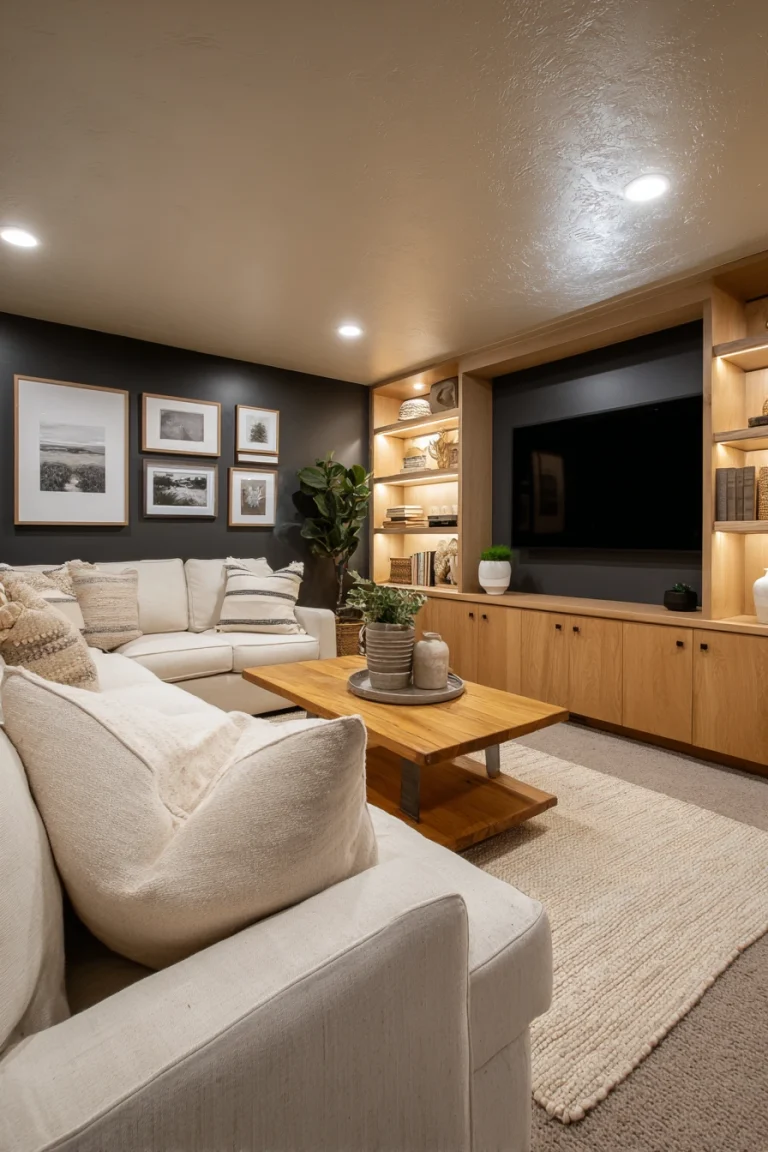
A cozy basement lounge is one of the easiest rustic basement ideas to use every day. Start with a low-profile sectional in warm oatmeal linen so the room feels light, even if your windows are small. Add a reclaimed wood coffee table with visible knots and natural wear to bring in that lived-in character without clutter.
Exposed ceiling joists painted matte charcoal can make the ceiling look higher and hide pipes or wiring. Ground the seating area with a large woven jute rug, then layer in warmth with soft amber table lamps and warm LED recessed lighting. Keep the look tidy by using built-in shelves with baskets for storage, so games, cords, and extra throws have a home.
To style it, keep decor simple: a few framed nature prints, a ceramic vase, and one chunky knit throw. Mix textures more than colors. If you have concrete floors, add felt pads under furniture and a thick rug pad to cut the echo. Place one side table near each seat so the lounge works for snacks, laptops, and reading.
- Float the sectional a few inches off the wall to prevent a cramped feel.
- Use two light sources: a table lamp plus recessed lights on a dimmer.
- Choose baskets in the same tone for a calmer shelf look.
- Add one leather or faux leather pillow for contrast.
- Hide cords with paintable raceways along the baseboard.
Pro Design Tip: Paint joists, ducts, and the ceiling the same matte charcoal so everything blends, then use warm bulbs to keep the room cozy instead of dark.
Budget Considerations: Reclaimed wood coffee tables can cost more; look for a used solid-wood table and sand it lightly, then finish with a matte clear coat for a rustic look.
2. Rustic Basement Home Theater


A practical home theater works best when it feels comfortable, not overly fancy. For rustic basement ideas with a cinematic mood, use a wall-mounted projector screen paired with two oversized leather recliners. Leather holds up well in a family space and looks better with time.
Create a warm backdrop with a reclaimed barn wood accent wall behind the screen or behind the seating, depending on your layout. Paint the ceiling black to reduce glare and help the picture pop. Add a rustic media console with iron hardware to store devices, remotes, and board games. For lighting, use dimmable sconces and subtle floor lighting so people can walk safely without washing out the screen.
Style it with blankets, a small side table for each recliner, and a lidded basket for extra pillows. Keep the main walkway clear from the stairs to the seats. If your basement has low ceilings, pick recliners with a slightly lower back and place the screen a bit higher on the wall. Use a simple color plan: warm wood, black ceiling, and tan or brown seating.
- Install blackout shades if you have an egress window near the screen.
- Use a rug to reduce sound bounce and soften footsteps.
- Choose a media console with doors to hide visual clutter.
- Label cables and use Velcro ties for quick fixes later.
- Keep a charging station inside a cabinet to avoid messy cords.
Pro Design Tip: Put all theater lights on a single dimmer scene so you can switch from “entry” lighting to “movie” lighting in one touch.
Budget Considerations: Barn wood panels can be pricey; you can get a similar look with pine planks stained in mixed tones or peel-and-stick wood wall tiles in a matte finish.
3. Rustic Basement Bar Area


A compact basement wet bar adds function without taking over the room. For rustic basement ideas made for entertaining, start with a reclaimed oak counter that shows real grain and a little patina. A shiplap backsplash keeps the area bright and ties in well with farmhouse style.
Open wood shelving is great for glassware, but it needs order. Group items by type and leave some empty space so it does not look crowded. Choose a matte black faucet and fixtures for a clean contrast against warm wood. Metal bar stools with worn leather seats bring comfort and texture while staying slim for tight spaces.
Make the layout work hard: include under-counter storage for trash, bar tools, and napkins, plus a mini fridge for drinks. Warm pendant lights help the counter look rich and inviting, especially in a basement with limited daylight. Style the shelves with a few simple pieces, like a stoneware pitcher or a small framed print, and keep bottles on a tray so cleanup is fast.
- Use a narrow runner behind the bar to soften cold floors.
- Add a towel ring near the sink for quick drying.
- Choose matching glassware so the open shelves look neat.
- Store extras in labeled bins under the counter.
- Use hooks inside cabinet doors for bar tools.
Pro Design Tip: Install under-shelf LED strips on a warm setting to light the counter and make open shelving look intentional, not like storage.
Budget Considerations: A true reclaimed oak slab can be expensive; use a butcher block top and stain it to a weathered oak tone, then seal it well for water resistance.
4. Rustic Basement Family Game Room


A family-friendly game room is a smart way to use basement square footage. Rustic basement ideas work well here because wood, leather, and durable fabrics handle daily wear. A rustic wood pool table becomes the main feature, so plan the room around it with enough clearance for cue sticks.
Hang a vintage-inspired pendant light centered over the table to create focus and better play. Add distressed leather armchairs for a comfy spot to watch, and use a reclaimed wood feature wall to bring warmth to what can be a large open space. Storage cabinets are key for board games, sports gear, and extra balls. Choose cabinets with doors so the room stays tidy even when life is busy.
To style it, keep the rug tough and low pile so chairs move easily. Add a small side table near the chairs for drinks. Use wall hooks or a slim rack for cues to keep them off the floor. If you want more comfort, add a throw and one pillow per chair, but avoid too many small items that can get knocked over during games.
- Measure for pool table clearance before buying any furniture.
- Use a cabinet with adjustable shelves for flexible storage.
- Add a corkboard or small chalkboard for score keeping.
- Choose a rug that hides stains and has a non-slip pad.
- Keep one open bin for quick cleanups after play.
Pro Design Tip: Pick one “hero” wood tone for the pool table and wall, then keep other wood pieces slightly lighter to avoid a heavy, dark room.
Budget Considerations: Solid wood pool tables can be costly; look for a used table in good condition and spend the savings on new felt and proper lighting.
5. Rustic Basement Reading Nook


A quiet reading nook is perfect if your basement has even one small egress window. For rustic basement ideas that feel calm, start with a cushioned armchair in textured taupe fabric. This color hides wear and pairs well with wood tones. Add a reclaimed wood side table with a simple shape so the corner feels open.
Floating shelves made from rough-sawn pine give you storage without taking floor space. Keep shelf styling light: a short stack of books, one framed photo, and a small plant that can handle low light. Use a soft wool throw blanket for comfort and texture. Warm wall sconce lighting plus daylight from the window makes the space feel usable in the morning and at night.
To style it, choose a small rug to define the nook and reduce basement chill. If the window well is deep, add a simple curtain or Roman shade for privacy. Keep a basket nearby for extra throws or kids’ books. If you like hot drinks, add a coaster and a small tray on the side table so you do not stain the wood.
- Angle the chair slightly toward the window for better natural light.
- Choose a sconce with a swivel arm for reading comfort.
- Keep shelves within easy reach so the nook stays practical.
- Add one lumbar pillow in a warm rust or olive tone.
- Use a lidded candle or diffuser for a soft, clean scent.
Pro Design Tip: Use a plug-in sconce if wiring is hard in a basement; hide the cord with a paintable cover for a built-in look.
Budget Considerations: Reclaimed wood shelves can add up; use standard pine boards, rough them lightly with sandpaper, then stain and seal for a similar rustic finish.
6. Rustic Basement Guest Suite


A basement guest suite should feel restful and simple. Rustic basement ideas help the space feel warm instead of bare, especially in a finished basement. Start with a queen bed dressed in neutral linens, then add a reclaimed wood headboard for texture and character.
Use matching nightstands with black iron accents to tie in the rustic look. Soft bedside lighting matters a lot in a basement, so use warm bulbs and shades that diffuse light. A vintage-style area rug adds comfort underfoot and helps the room feel like a real bedroom, not a spare space. Add a small dresser for practical storage so guests can unpack and the room stays tidy.
To style it, keep wall decor minimal: one large print or a set of two smaller frames above the bed. Add a tray on the dresser for keys and chargers. If you have limited natural light, place a mirror across from the door or near a lamp to bounce light around. Use breathable bedding and a simple extra blanket in a basket, so guests can adjust to cooler basement temps.
- Choose bedding in off-white, beige, or light gray to brighten the room.
- Add a bench at the foot of the bed for luggage.
- Use blackout curtains if there is an egress window.
- Keep one open outlet free for guest charging.
- Store extra towels in the dresser or a lidded basket.
Pro Design Tip: Layer lighting with bedside lamps plus one ceiling fixture on a dimmer so the room works for reading, relaxing, and sleep.
Budget Considerations: A reclaimed headboard can be expensive; make one with stained fence pickets or a wood panel cut to size and mounted behind the bed.
7. Rustic Basement Laundry and Utility Zone


A basement laundry area does not have to feel cold. With rustic basement ideas, you can make it organized and nice to use. Start with front-load washer and dryer built into a reclaimed wood cabinet surround. This creates a finished look and can add counter space for folding.
Open shelving with woven baskets keeps supplies easy to grab while reducing visual mess. A farmhouse utility sink is useful for soaking, stain work, and quick cleanups. Choose matte black fixtures for a simple contrast that matches rustic hardware. Concrete flooring is common in basements, so add a durable patterned runner rug to soften the space and help with sound.
Style it like a work zone: keep only a few items on the counter, like a glass jar of clothespins and a small tray for lost socks. Add wall hooks for hang-dry items and a slim rod if you have room. Use bright task lighting with a touch of warmth so colors look true when you treat stains. If the room feels humid, add a small dehumidifier to protect wood and keep towels fresh.
- Use labeled baskets for pods, dryer sheets, and cleaning cloths.
- Add a fold-down drying rack on the wall to save space.
- Install a backsplash panel behind the sink for easy wipe downs.
- Keep a small trash can and a lint bin within reach.
- Use shelf brackets in black metal to match fixtures.
Pro Design Tip: Build a simple “landing zone” shelf for keys and mail near the laundry if it connects to stairs, so the area serves two jobs without adding clutter.
Budget Considerations: Custom cabinet surrounds can be costly; use stock base cabinets and add reclaimed wood doors or trim for a rustic face upgrade.
8. Rustic Basement Bar and Lounge Combo


A multi-use entertaining space is ideal if your basement needs to host friends and family. Rustic basement ideas help separate zones without building walls. Combine a small bar with a comfortable lounge, using a live-edge wood countertop as a focal point and leather counter stools for easy seating.
In the lounge zone, choose a sectional sofa in earthy brown fabric that can handle snacks and movie nights. An exposed brick wall adds texture and makes the space feel grounded. Add a chunky reclaimed wood shelf for decor and bottles, but keep it simple so it does not look busy. Warm pendant lighting over the bar and soft floor lamps near the sofa help define each area and keep the room inviting.
To style it, repeat materials across zones: black metal accents, warm wood, and one shared color like cream or olive. Add a tray on the bar for tools and coasters. Put a large rug under the sofa to anchor the lounge, and keep a clear path between bar and seating. If you host often, add a small nesting table set so you can pull surfaces closer when needed.
- Use pendant lights at the bar and floor lamps at the sofa for balance.
- Add a small speaker shelf to keep tech off the counter.
- Choose wipeable upholstery or add washable slipcovers.
- Use wall-mounted bottle openers and hooks to save space.
- Keep bar stools tucked in to protect walkways.
Pro Design Tip: Use two rugs with similar colors but different textures to mark each zone, so the room feels planned while still relaxed.
Budget Considerations: Live-edge slabs can be high priced; consider a thick wood counter with a beveled edge and a dark oil finish for a similar rustic feel.
9. Rustic Basement Craft and Hobby Corner


A basement craft corner can be small and still work well if it is organized. Rustic basement ideas fit this space because reclaimed wood and simple tools look natural and hide minor wear. Start with a sturdy reclaimed pine worktable that can handle paint, glue, and cutting.
Add open shelving for supplies you use often, and use bins for small items so the shelves do not look messy. A pegboard organization wall is perfect for scissors, rulers, tape, and tools. Pair it with a vintage-style task lamp so you get bright light right where you work. Concrete floors are easy to clean, but they feel hard, so add a small woven rug under your stool for comfort.
To style it, keep the color palette calm: warm wood, black metal, and neutral fabric. Use jars for buttons and clips, and label them so you can find things fast. If you have a nearby window, face the worktable toward it for better daytime light. Add one small bulletin board for notes and inspiration, but keep it limited so the corner stays focused and not chaotic.
- Use a pegboard with hooks that can move as your needs change.
- Keep a “current project” tray to stop supplies from spreading.
- Add a narrow shelf for paint and glue bottles to prevent spills.
- Use a stool with a padded seat for longer sessions.
- Install a small trash bin and a recycling bin under the table.
Pro Design Tip: Mount the pegboard above a shallow ledge shelf so small tools can lean and dry, and you gain storage without taking up table space.
Budget Considerations: Reclaimed worktables can be costly; use a simple solid-wood table and distress it lightly, then add a clear matte topcoat for easy cleaning.
10. Rustic Basement Mudroom Storage Area


A basement mudroom and storage wall helps a family stay organized, especially if the basement connects to a garage or backyard. Rustic basement ideas work well here because stained oak, black metal, and woven baskets look good even when the space is busy. Start with built-in cubbies in stained oak to give every person a spot.
Add black metal coat hooks for bags, jackets, and hats. Include a bench with hidden storage so shoes can tuck away fast. Woven baskets are great for small items like gloves, leashes, and sports gear. Choose durable slate-look flooring because it handles water and dirt better than soft surfaces, and it still looks natural with rustic materials.
To style it, keep the wall clean and repeat the same basket style across cubbies. Add a small mirror near the stairs for quick checks before heading out. Use warm overhead lighting and take advantage of daylight from the stairwell to keep the space bright. If you have kids, add lower hooks and a labeled bin for each child so they can put things away on their own.
- Plan cubby sizes for real items: backpacks, boots, and helmets.
- Use a boot tray under the bench to protect floors.
- Label baskets so everyone knows where things go.
- Add a small shelf for mail and keys near the exit path.
- Install wall protection like beadboard to prevent scuffs.
Pro Design Tip: Mix open cubbies with a few closed cabinets so the wall looks tidy even on busy days, while still keeping daily items easy to grab.
Budget Considerations: Built-ins can be expensive; use ready-made cube organizers and add a stained wood top plus matching hooks to get a similar custom look.
Conclusion
Rustic basement ideas work best when they mix warmth and function. Reclaimed wood, soft lighting, and simple storage can make a basement feel like a true part of the home.
Pick one room goal first, like a lounge or storage wall, then build around it with a clear layout and a calm color plan. Small upgrades, like better lighting and baskets, often make the biggest difference.
Use the tips above to style each space in a practical way, then adjust for your ceiling height, light levels, and budget. A rustic basement can be comfortable, organized, and ready for daily life.
FAQ
What colors work best for a rustic basement?
Warm neutrals like beige, taupe, and cream pair well with reclaimed wood and black metal accents.
How do I make a basement feel cozy if it has low light?
Use layered lighting with warm bulbs, add rugs, and choose lighter upholstery to reflect light.
Is exposed brick a good idea in a basement?
Yes, if the wall is dry and sealed. It adds texture and a rustic look, and it is easy to style with simple shelves.
What is the easiest rustic upgrade on a tight budget?
Swap lighting to warm bulbs, add woven baskets for storage, and use a wood-toned shelf or side table.
How can I reduce echo in a finished basement?
Add large rugs with pads, fabric seating, curtains near windows, and soft throws to absorb sound.
What flooring is best for a rustic basement?
Durable options like luxury vinyl plank, sealed concrete with rugs, or slate-look tile hold up well and fit rustic style.