Basement family room ideas can turn an unused lower level into the most-used space in the house. With the right layout, lighting, and storage, a basement can feel warm, bright, and easy to live in.
This guide shares 10 finished-basement looks you can copy, from a cozy lounge with a modular sectional to a home theater setup with blackout curtains. Each section includes simple styling steps, plus a pro design tip and a budget note.
If you came from Pinterest, use these ideas to plan your seating, pick family-proof materials like performance fabric and washable rugs, and make room for games, toys, and movie nights without clutter.
Read through the sections in order, then save the ones that match your space size, how your family relaxes, and how much storage you need.
1. Cozy Sectional Basement Family Room


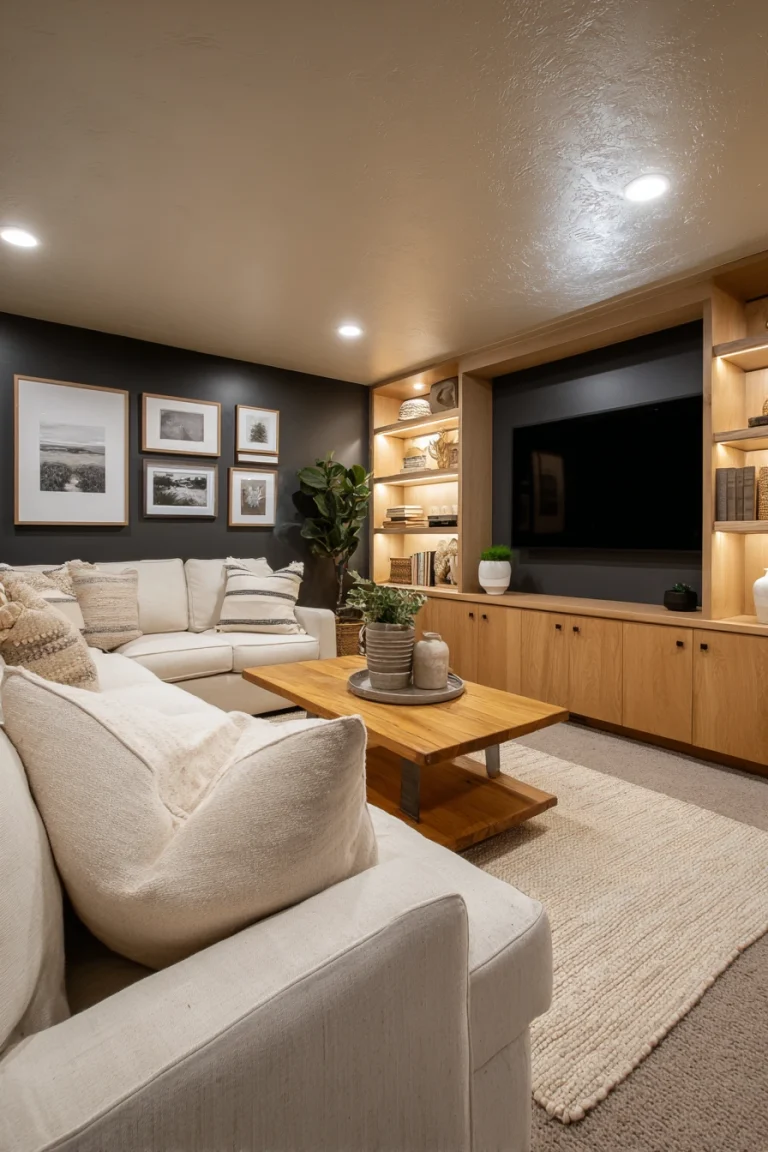
This basement family room idea is built around a large modular sectional in durable beige performance fabric. The big win here is comfort without worry, since performance upholstery handles spills, pet hair, and daily use. A deep pile area rug warms up the room and helps sound feel softer, which matters in a basement with hard surfaces.
Keep the layout simple: place the sectional facing a wall-mounted TV, then add a low oak coffee table you can reach from every seat. A media console with hidden storage keeps remotes, controllers, and board games out of sight, so the room stays calm even when it is busy. Soft wall sconces give a cozy glow and free up floor space compared to table lamps.
The finished look comes from the ceiling choice. An exposed ceiling painted matte black can feel clean and modern, and it hides ducts and pipes. Balance that darker ceiling with warm neutrals plus charcoal and tan accents. Add lived-in details like throw blankets and a small stack of games to make it feel real, not staged.
- Choose a modular sectional so you can rework the shape for movie night or guests.
- Use a deep pile rug for comfort, but place a thin mat under the coffee table for easier cleanup.
- Pick an oak or light wood coffee table to keep the room from feeling heavy.
- Install sconces on a dimmer so you can switch from playtime to TV lighting.
- Use baskets inside the media console for quick “drop zones” for toys and chargers.
Pro Design Tip: Mount the TV so the center of the screen sits near seated eye level, then hide cords in an in-wall kit or surface raceway painted to match the wall.
Budget Considerations: If built-in storage is pricey, use a ready-made media cabinet with doors and add matching bins to get the same clean look for less.
2. Modern Basement Family Room With Play Zone


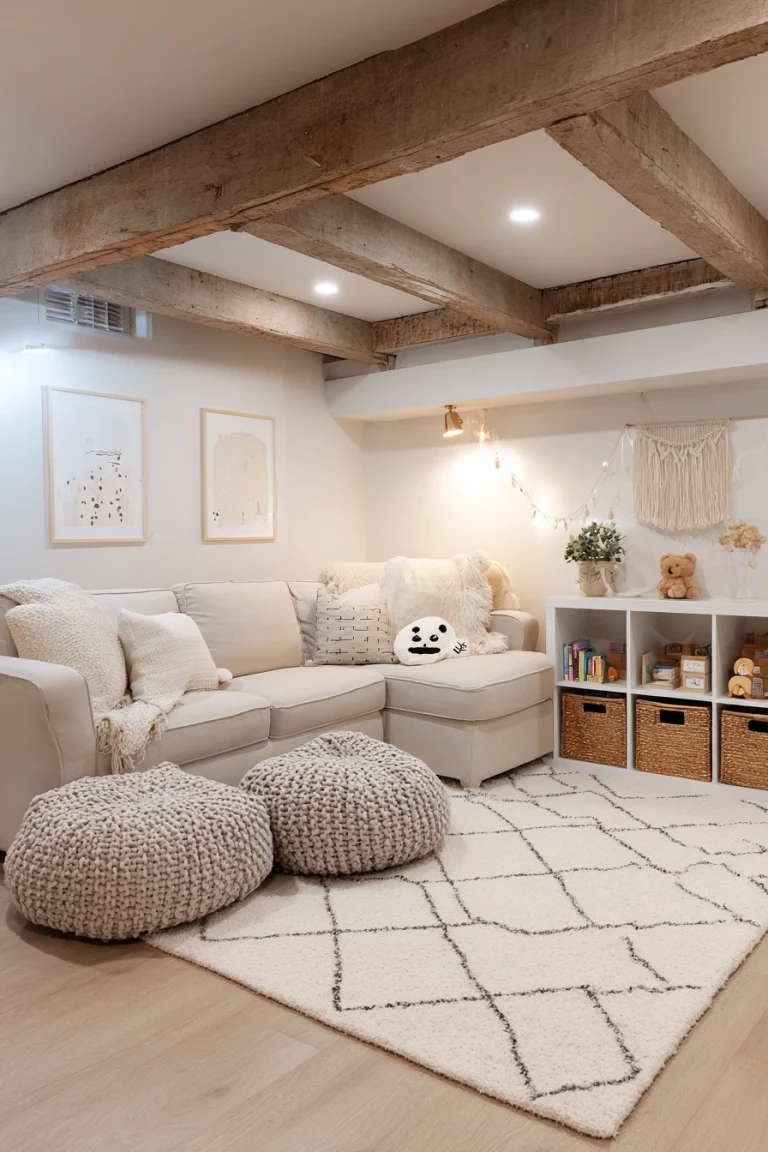
This modern basement family room is planned for everyday family use, with a comfortable L-shaped sofa, built-in toy storage, and a washable rug. The key is zoning: one side is for lounging and TV, and one side is a small play corner. When kids can play close by, the room feels calm because everyone is in the same space.
Light greige walls keep the basement bright without looking stark, and warm wood tones add comfort. Matte black accents, like shelf brackets or lamp bases, make the room look finished. Floating shelves are perfect for books and family photos, but keep the styling simple so it does not look messy. A round ottoman works as a soft coffee table and extra seat, and it is safer for kids than sharp corners.
Recessed lighting helps avoid dark spots. If you can, add a dimmer so you can lower the light for TV time. For the play corner, use a small rug, a low bin system, and one basket for “today’s toys.” That keeps the toy spread under control and makes cleanup faster. Add subtle wear-friendly pieces, like textured pillows and a throw, so the space feels lived-in.
- Use closed bins for tiny toys and open cubbies for big items like blocks.
- Pick a washable rug in a mid-tone pattern to hide crumbs and marks.
- Limit shelf decor to a few frames and book stacks to reduce visual clutter.
- Choose an ottoman with a wipeable fabric and a tray for snacks.
- Keep a lidded basket near the sofa for quick end-of-day pickup.
Pro Design Tip: Plan storage by category and height: everyday toys at kid level, puzzles and games higher up, and “messy” sets in lidded bins.
Budget Considerations: If custom built-ins cost too much, line up two low bookcases and add matching doors or fabric bins for a built-in look.
3. Sectional Seating With Fireplace Feature Wall


A sleek electric fireplace feature wall can make a finished basement feel like a main-floor living room. With a mounted TV above the fireplace, the wall becomes the clear focal point, which makes furniture placement easier. An oversized sectional in textured gray fabric keeps the look family-friendly and hides wear better than light solid fabrics.
To avoid a “one big sofa” feel, add two accent chairs across from the sectional. This creates a conversation shape and gives adults a place to sit while kids take over the couch. Nesting coffee tables are practical in a basement family room because you can spread them out for snacks or slide them away to make floor space for games.
Built-in cabinetry helps the room stay organized. Use closed doors for clutter and a few open shelves for display. Layered lighting matters here: recessed lights for overall brightness and a floor lamp near the chairs for reading. Keep decor simple and cozy with a soft throw, a couple of pillows in charcoal and warm tan, and one large piece of art to balance the feature wall.
- Choose an electric fireplace with adjustable flame and heat so it works year-round.
- Use textured upholstery so the room looks rich even in a neutral palette.
- Place nesting tables on a rug so they do not scratch hard floors.
- Store board games and controllers in labeled bins inside the cabinetry.
- Add one tall plant (real or faux) to soften the straight lines of the built-in wall.
Pro Design Tip: Keep the TV and fireplace aligned in one centered composition, and use a simple surround so the wall looks calm even with two focal elements.
Budget Considerations: If full cabinetry is not in the budget, use two matching base cabinets with a countertop and add a few floating shelves above.
4. Basement Family Room With Home Theater Feel


This basement family room idea takes cues from a home theater, but it stays practical for regular use. Start with a plush sectional for long movie nights. Pair it with a large wall-mounted screen or TV and a slim media cabinet so the front wall stays clean. Blackout curtains help control light, even with a small egress window, and they also make the room feel cozy.
Acoustic wall panels can improve sound and reduce echo, which is common in basements. You do not need a full studio setup to notice a difference. A dark navy and warm wood palette feels rich and helps the screen stand out. Carpet tile flooring adds comfort and is easy to replace if a piece gets stained, which is smart for a family entertainment space.
A snack bar with bar stools makes the room more fun and keeps food away from the main seating. Use soft LED accent lighting behind the screen wall or under a shelf to guide the room without glare. Add a basket for blankets and a small tray system for remotes. The goal is a space that looks intentional but still works for kids, teens, and guests.
- Use blackout curtains with a wraparound rod to block side light leaks.
- Choose carpet tiles in a speckled pattern to hide marks.
- Add acoustic panels in a simple grid for a clean look.
- Keep the media cabinet shallow so walkways stay open.
- Set up a snack station with a small fridge drawer or a covered bin for treats.
Pro Design Tip: Place LED accent lighting behind the screen wall or along the baseboard so you get safe, low light without washing out the picture.
Budget Considerations: If acoustic panels are too expensive, start with thick curtains, a large rug, and upholstered seating to cut echo at a lower cost.
5. Basement Family Room With Rustic Wood Accents


A warm basement family room with rustic wood accents can feel inviting even with polished concrete floors. Start with a comfortable linen sofa and a leather armchair to mix textures. Add a thick neutral rug to soften the concrete and define the seating zone. Reclaimed oak floating shelves bring in character and give you a place for books, framed photos, and a few simple objects.
Woven baskets are a smart storage solution in a family basement. They hide toys, blankets, and extra pillows while still looking natural. Exposed painted beams add a little industrial style, especially when paired with subtle metal details like black shelf brackets or a steel coffee table base. Keep the palette earthy with beige and brown, then add small contrasts like a charcoal pillow or a black frame.
Lighting should feel layered and cozy. Use table lamps on side tables for warm pools of light, then rely on recessed fixtures for general brightness. If you have a small window, keep treatments light so you get as much daylight as possible. Style it with practical touches: a tray for drinks, a stack of family games, and a soft throw within reach of the sofa.
- Use a large rug to cover as much concrete as you can in the seating area.
- Mix linen and leather for a relaxed look that hides wear.
- Keep shelf styling simple: books, one plant, and a few frames.
- Use baskets with handles so kids can help carry toys to storage.
- Add a wood side table for warmth and a spot for a lamp.
Pro Design Tip: Repeat the same wood tone three times, such as shelves, a side table, and picture frames, so the rustic accents look planned instead of random.
Budget Considerations: Reclaimed wood can cost more; for a similar look, choose new oak shelves with a matte stain or look for salvaged boards locally.
6. Small Basement Family Room Layout


Small finished basement family room ideas work best when every piece earns its place. A slim-profile loveseat keeps seating comfortable without blocking circulation. Pair it with a wall-mounted TV to free up floor space, then add a narrow console table or compact storage bench for the basics.
Bright off-white walls help open the space, especially when basements have limited natural light. Light oak and soft gray finishes keep it airy and modern. A corner reading chair can make the room feel more complete, but choose a small footprint style with open legs so the room feels less crowded. Keep the arrangement functional: clear walkways, no oversized coffee table, and storage close to where you sit.
Decor should be family-friendly and low effort. Use a few pillows, one throw, and one medium-size piece of wall art. For toys or games, a storage bench with lift-top or baskets underneath is an easy win. If you need a “table,” use a small round side table that can slide next to the loveseat and move when you need more floor space.
- Mount the TV and store devices on a small floating shelf below.
- Use a storage bench as both seating and a place for games.
- Choose a compact chair and a slim floor lamp for a reading corner.
- Pick one large rug instead of several small ones to reduce visual clutter.
- Use wall hooks or a small tray to control headphones and remotes.
Pro Design Tip: Scale down the coffee table first; in small basements, two small nesting tables often work better than one bulky piece.
Budget Considerations: Instead of custom furniture, look for apartment-size seating and use a basic wall-mount to create the same open feel.
7. Basement Family Room With Built-In Storage


A basement family room with custom built-in storage solves the biggest basement problem: clutter. A full wall with closed cabinets, open shelving, and integrated bench seating gives you spots for everything. Closed doors hide toys and extra blankets, while open shelves can hold a few books and framed photos for a homey look.
Pair the built-ins with a comfortable sectional in textured taupe fabric. Taupe sits nicely between warm and cool, so it works with warm white walls and natural wood cabinets. Matte black hardware adds contrast and keeps the storage wall looking crisp. A large woven rug brings softness and helps define the main seating zone, especially if the basement floor is hard.
Make the room work for game nights by planning storage for family games. Use labeled bins or drawer dividers so pieces do not get lost. Bench seating is also great for kids, since it creates extra seats without adding bulky furniture. For lighting, soft recessed lights keep it even, and you can add a small lamp on a side table for a warmer feel in the evening.
- Use closed cabinets for toys and open shelves for a few display items.
- Add bench cushions in a wipeable fabric for comfort and easy cleaning.
- Store games in clear bins so you can see what you have.
- Choose matte black pulls to modernize natural wood cabinetry.
- Keep one lower drawer as a “drop zone” for remotes and chargers.
Pro Design Tip: Design the built-in wall with a mix of closed and open areas, aiming for about two-thirds closed storage to keep the room looking calm.
Budget Considerations: If custom built-ins are out of reach, combine stock cabinets with a bench and add the same hardware for a similar look.
8. Bright Basement Family Room With Neutral Palette


A bright and welcoming basement family room can still be neutral and cozy. Cream, sand, and soft gray create a light palette that helps a basement feel less underground. An oversized sofa anchors the room, while two accent chairs make seating flexible for family and guests.
Light oak furniture, like a simple coffee table, adds warmth without making the space heavy. Sheer window treatments are a good fit near a small egress window because they let in daylight while softening the view. Layered rugs can work in a basement when done on purpose: start with a large base rug, then add a smaller patterned rug on top to bring in texture and help hide wear.
Framed wall art finishes the room and makes it feel like a true living space. Pick pieces with warm neutrals and a touch of gray to tie everything together. For real family use, add storage that blends in, such as a lidded ottoman or a sideboard with doors. Keep surfaces clear by using trays, and choose pillow covers in linen-like fabrics for that soft, magazine-style texture.
- Use a warm neutral wall color and repeat it in pillows and throws.
- Choose sheer curtains to maximize light from small windows.
- Layer rugs with different textures to add depth without dark colors.
- Add a sideboard with doors to hide games and kids’ items.
- Use a tray on the coffee table to group remotes and coasters.
Pro Design Tip: To keep a neutral room from looking flat, mix at least three textures, such as linen pillows, a woven rug, and light wood furniture.
Budget Considerations: Instead of buying two rugs, start with one large neutral rug and add texture with affordable pillow covers and a throw.
9. Basement Family Room With Reading Nook


A basement family room with a reading nook gives the space a quieter purpose beyond TV time. Place the nook beside the main seating area so it still feels connected. A comfortable sectional covers family movie nights, while an oversized lounge chair creates a spot for reading, homework, or calm time.
Built-in bookshelves add storage and make the nook feel intentional. Walnut wood shelves look warm against taupe walls, and they pair well with a textured wool rug that softens sound. An arched floor lamp is a great choice because it can reach over the lounge chair without taking up table space. Add a storage ottoman to hold extra blankets and serve as a footrest.
To style the nook, keep the shelves simple: a row of favorite books, a few baskets for smaller items, and one framed photo. Place a small side table near the chair for drinks and a reading light. If you want the basement to feel more inviting, add one scented candle (used safely) or a small diffuser on a shelf. The goal is a functional layout that works for relaxing and family time, with realistic lived-in details.
- Use a lounge chair with a durable fabric and a removable cushion cover.
- Add an arched floor lamp for focused light without extra tables.
- Keep bookshelves organized with baskets on the lower shelves.
- Choose a wool or wool-blend rug for warmth and sound control.
- Use a storage ottoman to hide blankets and kids’ books quickly.
Pro Design Tip: Give the reading nook its own light source and a small surface, so it feels like a true zone, not just a chair in the corner.
Budget Considerations: If built-ins are expensive, use two tall bookcases and trim them to the wall color for a built-in look on a smaller budget.
10. Contemporary Basement Family Room Entertainment Space


This contemporary basement family room is designed as a practical entertainment space that still feels comfortable. A streamlined sofa and two upholstered armchairs create a balanced seating group without taking over the room. A low-profile media unit keeps the front wall tidy, and concealed cable management is a must so the space looks clean in photos and in real life.
The color scheme of charcoal, warm white, and natural wood feels modern but not cold. Polished concrete floors are common in basements, and a large area rug brings in warmth and helps define the seating zone. Recessed ceiling lights give even light, while indirect LED strip lighting adds a soft glow that is great for movie nights and reduces harsh shadows.
A game table in the corner makes the basement more than a TV room. Choose a table that can handle puzzles, cards, and homework. Keep a small cabinet or shelf nearby for game storage so setup is fast. Finish the room with simple art, a couple of textured pillows, and one large tray for controllers and remotes. This is a realistic family home layout that supports both relaxing and active time.
- Hide cords with an in-wall kit or a surface raceway painted to match the wall.
- Use a large rug to soften concrete and improve sound.
- Add LED strip lighting on a dimmer for easy mood changes.
- Choose a compact game table that fits the corner without blocking walkways.
- Store games in a nearby cabinet so the table stays clear between uses.
Pro Design Tip: Keep furniture legs slightly raised and shapes low-profile so the basement feels open, even with multiple zones.
Budget Considerations: If LED lighting and new seating add up, start with cable management and a large rug first, then upgrade chairs one at a time.
Conclusion
The best basement family room ideas focus on comfort, storage, and lighting. When you plan clear zones for lounging, play, and games, the space stays easy to use every day.
Pick durable fabrics, add layered light, and use closed storage to control clutter. Start with the layout and rug size, then build the room with a few warm accents and practical pieces that fit your family.
FAQ
1. How do I make a basement family room feel brighter?
Use light wall colors, add more lamps, and choose a large rug and furniture in warm neutrals. Mirrors and sheer window treatments near an egress window can also help.
2. What is the best flooring for a basement family room?
Carpet tiles are soft and replaceable. Luxury vinyl plank is durable and water-resistant. If you have concrete, add a thick rug for comfort.
3. How do I reduce echo in a finished basement?
Add a big rug, curtains, and upholstered seating. Acoustic panels or fabric wall art can help if the room still sounds hollow.
4. Where should the TV go in a basement family room?
Put it on the main focal wall and keep the center near seated eye level. Hide cords with cable management to keep the wall looking clean.
5. What sofa fabric works best for kids and pets?
Performance fabric, tight-weave polyester blends, and washable slipcovers hold up well. Avoid delicate fabrics that snag easily.
6. How do I add toy storage without making the room look messy?
Use closed cabinets, lidded bins, and baskets that match the room colors. Keep a small “quick cleanup” basket near the sofa.
7. How can I fit a reading nook into my basement family room?
Use a corner chair, a floor lamp, and a small side table. Add a bookshelf or a few wall shelves to make it feel like a real zone.