Good basement room ideas make a dark, unused level feel like part of the home. With the right layout, lighting, and storage, a finished basement can handle movie nights, work days, play time, and guests.
This guide walks through 10 realistic setups, from a cozy family lounge with a sectional and media wall to a compact home gym with rubber flooring and a mirrored wall. Each space is designed for everyday use, not just photos.
You will get styling tips you can copy fast, plus simple upgrades like layered table lamps, acoustic panels, blackout curtains, and built-in shelving. Every section includes a Pro Design Tip and a Budget Consideration to help you plan.
Use these ideas to map out zones, pick durable materials, and choose a muted neutral palette that still feels warm. The goal is a basement that looks good and works well.
1. Cozy Family Basement Lounge


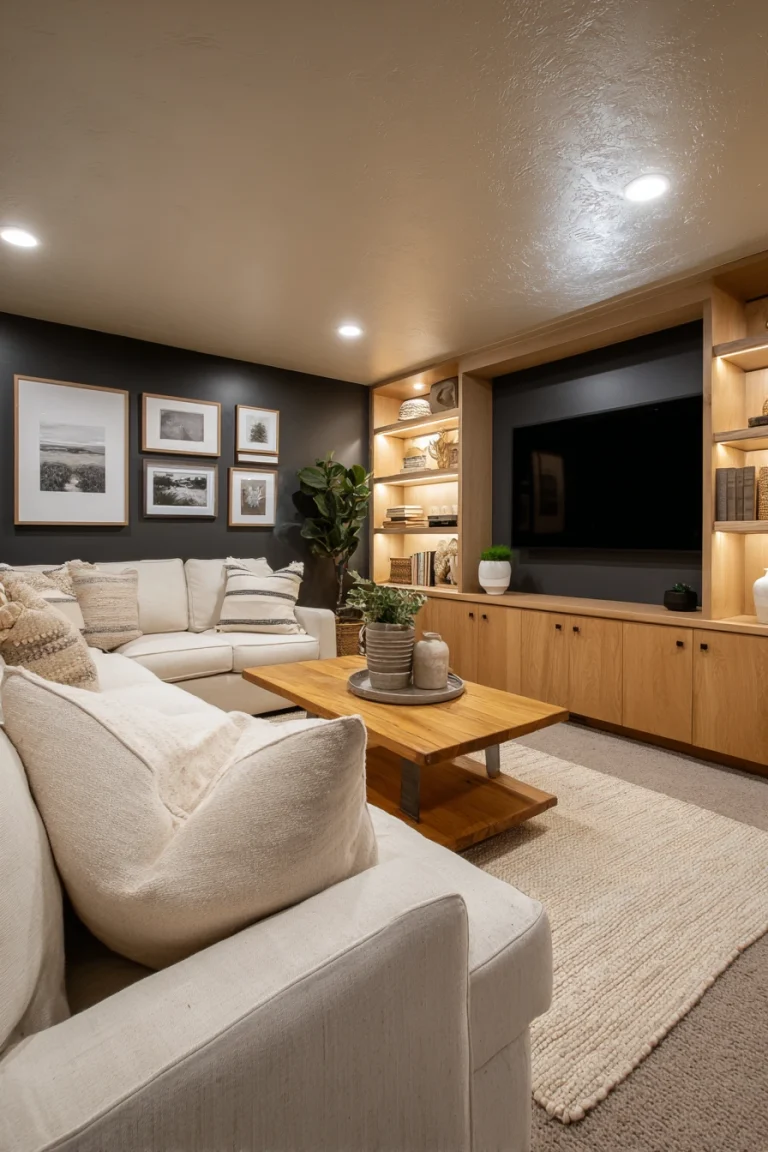
A cozy family lounge is one of the most useful basement room ideas because it supports real daily life. Start with a sectional fabric sofa in warm taupe and place it facing a built-in media wall. Concealed storage in the media wall keeps remotes, games, and blankets out of sight so the room stays calm.
Use a soft wool area rug to warm up the floor and help with sound. A low oak coffee table gives you a spot for snacks and keeps the sightline open in a wide-angle space. Stick with a muted neutral palette, then add charcoal and beige accents through pillows, a throw, and simple framed art.
Lighting is what makes a finished basement feel welcoming. Combine recessed ceiling lighting with layered table lamps so you can switch from bright cleaning light to soft movie-night light. Add realistic lived-in details like a basket of blankets, coasters, and one or two textured materials such as a knit throw or linen pillow.
- Float the sectional a few inches off the wall to prevent a tight look.
- Mount the TV at seated eye level and hide cords inside the media wall.
- Use closed cabinets for clutter and one open shelf for decor.
- Pick a coffee table with a lower shelf for board games.
- Choose performance fabric on the sofa for easy cleanup.
Pro Design Tip: Place two lamps on different sides of the room and use warm bulbs so the light feels even and soft, not harsh from one overhead source.
Budget Considerations: Built-in media walls can cost more; a ready-made wall unit with a few matching cabinet fronts can give a similar look for less.
2. Modern Basement Home Theater


Modern home theater basement room ideas work best when you control light and sound. In a compact finished basement, use black microfiber reclining seats to create a clear theater feel without taking up too much space. Keep walking paths wide so people can get in and out without bumping knees.
Install dark acoustic wall panels on the main viewing wall or side walls to cut echo. A wall-mounted projector screen keeps the front wall clean, and a slim console can hold media equipment without looking bulky. A plush carpet with subtle texture helps with sound and feels comfortable underfoot.
For lighting, dimmable LED strip lighting is a simple way to add a cinematic glow while still feeling like a real home. Add soundproof doors if the theater is near bedrooms or a home office. Keep the styling minimal so the screen is the focus, then add one framed poster and a small tray for remotes.
- Choose a projector screen size that fits the wall with space for speakers.
- Use blackout shades or heavy curtains near window wells.
- Put equipment in a ventilated console to prevent overheating.
- Use a universal remote to reduce device clutter.
- Add a small side table for drinks to protect seats and carpet.
Pro Design Tip: Paint the ceiling a darker matte color to reduce screen glare and help the room feel more like a theater.
Budget Considerations: Acoustic panels vary in price; you can start with a few panels in key spots and add more later as your budget allows.
3. Basement Game and Hangout Room


A game and hangout room is a smart choice when you want basement room ideas that serve both kids and adults. Use modular lounge chairs so you can change the layout for board games, homework, or a casual get-together. A round game table helps people talk and keeps corners from blocking walkways.
Built-in shelving for board games keeps the room organized yet relaxed. Warm wood finishes make the space feel less like a basement and more like a main-floor living area. Add a durable patterned rug that hides crumbs and scuffs, then choose soft grey walls to keep the look calm.
Task lighting above the table is key, especially in a basement with fewer windows. Use a pendant or a focused ceiling fixture, then add a floor lamp near the lounge chairs for softer light. Finish with framed art and a simple catch-all tray so the space stays tidy after game night.
- Keep the game table near shelving so setup is fast.
- Use bins on lower shelves for card games and small pieces.
- Pick chairs with wipeable fabric for easy cleaning.
- Add a small snack cabinet or bar cart to limit kitchen trips.
- Use felt pads under furniture to protect floors and rugs.
Pro Design Tip: Use a mix of open and closed storage so the wall looks styled, not like a store shelf full of boxes.
Budget Considerations: Built-ins can be pricey; bookcases secured to the wall with matching baskets can give a similar organized look for less.
4. Basement Home Office Nook


Small home office nook basement room ideas are perfect for work-from-home days when you need focus but do not have a spare room. Choose a compact oak desk with a clean top so the nook does not feel crowded. Pair it with an ergonomic chair that supports your back for long tasks.
Floating shelves with books and storage boxes keep supplies off the desk. A matte black desk lamp adds direct light for reading and video calls, while warm layered lighting makes the basement feel less dim. Light grey wall paint helps reflect light and keeps the space bright.
If your office is near a window well, add acoustic curtains to soften sound and give better light control. Keep the layout efficient: desk, chair, shelves, then one small plant or framed print. Use cable clips or a cord box so the area looks neat in the background of calls.
- Mount shelves within arm reach to avoid standing up often.
- Use a desk organizer to limit paper piles.
- Add a small rug to define the work zone and reduce echo.
- Place a mirror nearby to bounce light into the nook.
- Choose closed storage boxes in one color for a calm look.
Pro Design Tip: Position your desk so your face is lit from the side or front, not from behind, to avoid a shadowy look on video calls.
Budget Considerations: If a new ergonomic chair is out of reach, add a lumbar cushion and a footrest to improve comfort for less.
5. Basement Guest Room Retreat


Welcoming guest room basement room ideas should focus on comfort and privacy. A full-size upholstered bed with crisp white bedding looks clean and feels hotel-like. Add an upholstered bench at the foot of the bed so guests have a place to set a suitcase or fold clothes.
Keep the palette soft with beige and greige so the room feels bright even in a basement. Use slim bedside tables to save space, then add wall sconces for reading light to free up the table tops. A cozy rug warms the floor and makes getting out of bed more pleasant.
Blackout curtains are a big win in a basement guest room, especially near window wells. Include a practical storage cabinet for extra blankets, towels, and a few hangers. Add small touches that feel thoughtful, like a carafe of water, an extra phone charger, and a framed print.
- Use two pillows per person and add one throw at the end of the bed.
- Choose bedding that can be washed often without fuss.
- Place a lidded hamper or basket for used towels.
- Add a small mirror to help the room feel larger.
- Keep a night light or dim lamp for safe late-night walking.
Pro Design Tip: Use matching bedside sconces on dimmers so guests can read comfortably without lighting up the whole room.
Budget Considerations: Upholstered beds can cost more; a simple platform frame with an upholstered headboard panel can give a similar look at a lower price.
6. Basement Gym and Wellness Space


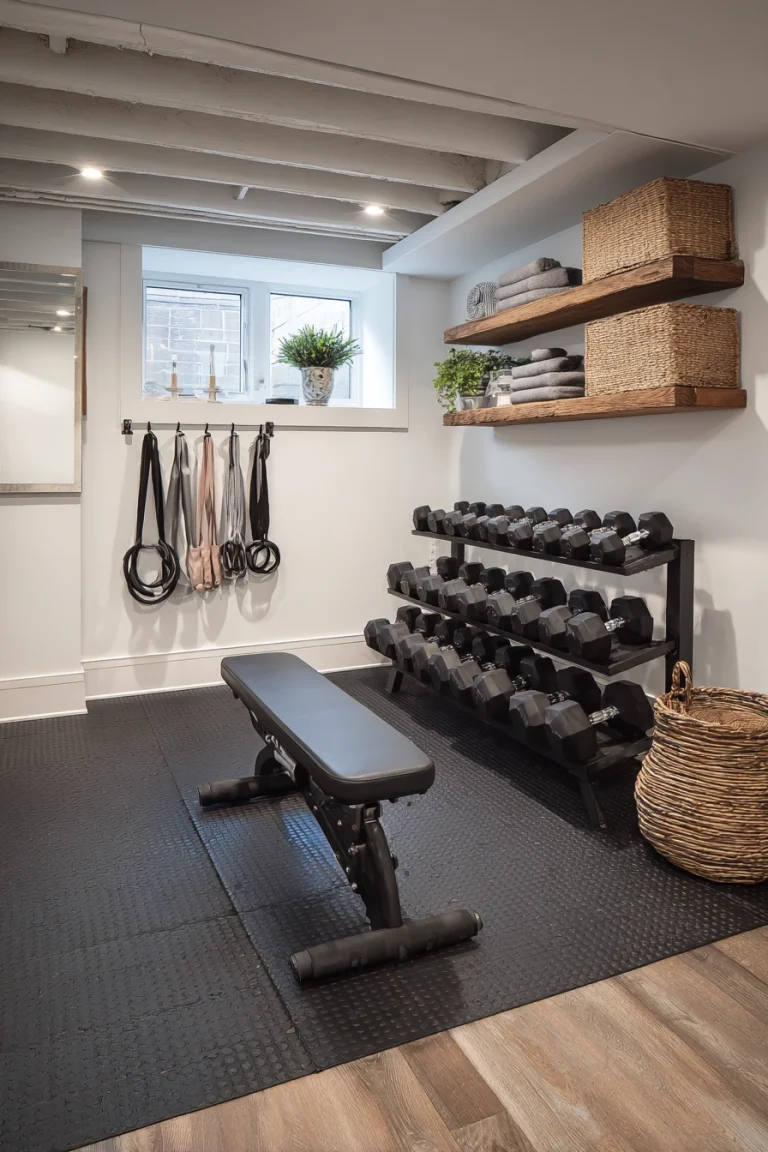
Compact home gym basement room ideas work best when the space is clean, bright, and easy to reset after each workout. Start with rubber flooring with subtle texture to protect the slab and reduce noise. A fresh white and charcoal palette keeps the room feeling sharp and simple.
A mirrored wall helps with form and makes the basement feel bigger. Keep equipment flexible: adjustable dumbbells, a yoga mat, and a simple bench cover strength and mobility without taking over the room. Add a wall-mounted storage rack so weights and bands are not left on the floor.
Bright recessed lighting matters in a basement where daylight is limited. If you can, add a small fan or dehumidifier to keep air fresh. Style the space like a wellness zone with a towel hook, a small basket for mats, and one framed print to soften the look.
- Leave a clear open area for stretching and floor work.
- Store small gear in labeled bins on the rack.
- Use a washable mat under the bench for sweat control.
- Keep a water station with a bottle and towel nearby.
- Add a timer or wall clock for simple workouts.
Pro Design Tip: Plan storage first, then choose gear that fits your storage zones so the gym stays tidy and easy to use.
Budget Considerations: Mirrors and rubber flooring add up; start with interlocking gym tiles and one large mirror panel, then expand later.
7. Basement Playroom with Storage


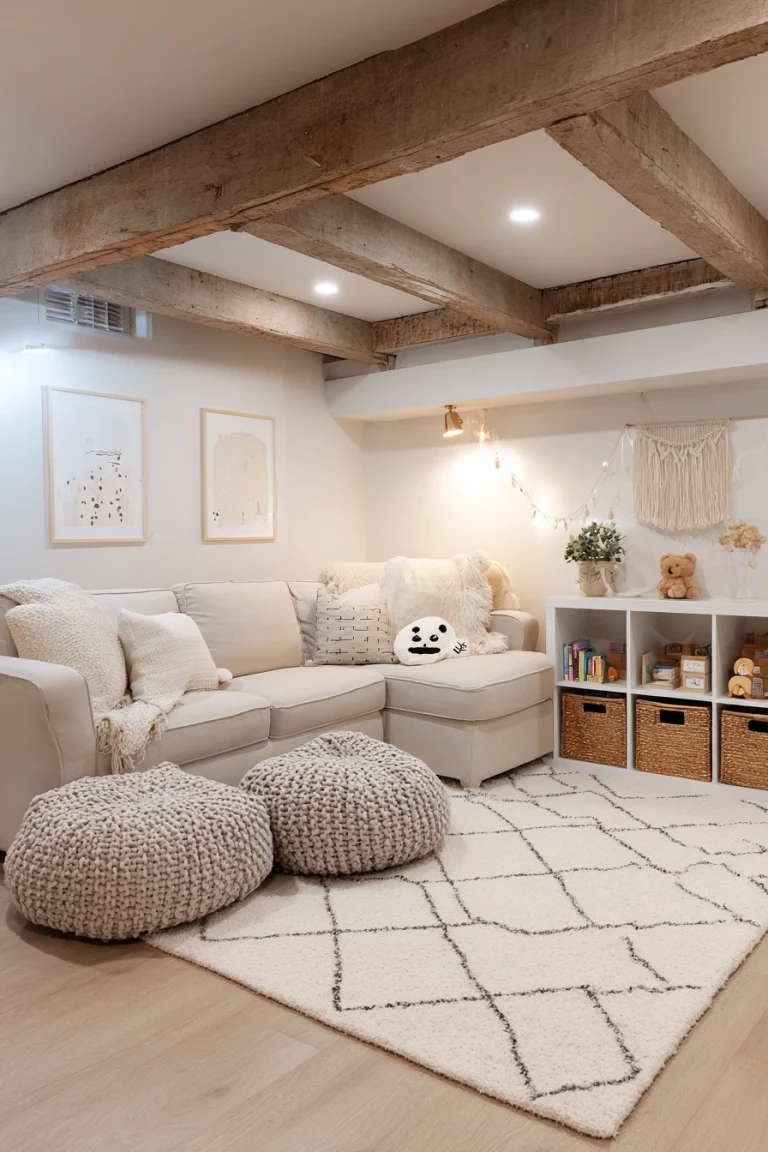
Cheerful playroom basement room ideas should be safe, easy to clean, and simple to organize. Use low child-safe storage cubes so kids can reach toys and learn to put items away. Add open shelving for books and bins, then rotate toys to keep clutter down.
A soft foam rug creates a comfy floor zone for building and reading. Include washable upholstered seating so adults have a spot to sit without worrying about spills. Keep the color plan colorful but controlled by choosing a neutral base, then adding a few bright accents through bins, pillows, and art.
Rounded furniture edges matter in a busy space. Combine natural and artificial lighting to reduce dark corners, especially near stairs. Add a small reading tent for quiet time, and hang a simple hook rail for dress-up items or backpacks.
- Sort toys by type and use picture labels on bins.
- Keep craft supplies in a closed box to avoid daily mess.
- Choose durable finishes that wipe clean fast.
- Use a small table and two chairs for puzzles and coloring.
- Place a basket near the door for quick end-of-day pickup.
Pro Design Tip: Create clear zones, like a reading corner and a building area, so the room feels calm even when it is full of toys.
Budget Considerations: Foam rugs and storage cubes can be found secondhand; wash bins and replace only worn items to save money.
8. Basement Bar and Entertaining Area


Home bar and entertaining basement room ideas are great when you want a spot for friends without taking over the main kitchen. A compact wet bar with a quartz countertop feels durable and easy to wipe clean. Warm walnut cabinetry keeps it rich and inviting, while brushed brass fixtures add a small touch of style.
Use open shelving for glassware so guests can help themselves, but keep everyday clutter in closed cabinets. Ambient under-cabinet lighting makes the bar usable at night and helps the basement feel warm. Add two upholstered bar stools with backs for comfort and longer chats.
Include a small lounge corner with accent chairs so people can sit away from the bar. A simple rug and a small side table make the corner feel finished. Keep surfaces clear by adding a tray for bottles and a bowl for napkins, and store extras like mixers in one cabinet.
- Install a small sink if plumbing allows for easier cleanup.
- Use a backsplash that wipes clean, like tile or quartz slab.
- Choose stools that tuck fully under the counter to save space.
- Add a small mini fridge if you entertain often.
- Use warm bulbs to keep the lighting soft and flattering.
Pro Design Tip: Mix one metal finish only, like brass, across the faucet, pulls, and lighting so the bar looks cohesive.
Budget Considerations: Quartz counters cost more; a high-quality laminate or butcher block top can look great and lower the total spend.
9. Basement Reading and Relaxation Corner


Reading corner basement room ideas turn an unused spot into a quiet retreat. Start with an oversized armchair in textured linen so it feels soft but still structured. Place a small side table close enough for a mug, a book stack, and a lamp.
A built-in bookshelf is ideal for storage and looks polished, but a tall bookcase can work too. Add a floor lamp with a warm bulb for focused light that does not strain your eyes. Use a soft neutral rug and layered textiles, like a throw and lumbar pillow, to make the corner feel cozy.
A painted brick wall can add texture and help the space feel grounded. If the corner is near a window well, keep the window treatment light so you still get daylight, then add a second light source for evenings. Finish with one piece of calm art and a small basket for extra blankets.
- Angle the chair slightly toward the light source for better reading.
- Keep a small ottoman to support your feet.
- Use bookends or baskets to prevent shelf mess.
- Add a clip-on light if you read late at night.
- Choose stain-resistant fabric if kids or pets use the chair.
Pro Design Tip: Use two layers of lighting, one lamp for reading and one soft ambient light, so the corner feels relaxing and not harsh.
Budget Considerations: Built-in shelves can be expensive; paint two matching bookcases the wall color to get a similar custom look for less.
10. Basement Multiuse Living Space


Multiuse basement living space ideas help you get more value from one room. A slim sofa can create a lounge zone while leaving space for storage and a small work area. Use wall-mounted shelving and concealed cabinets to keep the room from feeling like a catch-all.
A folding desk is a smart addition when you need a spot for homework or emails but do not want a full office. Neutral carpet tile flooring is practical because you can replace one tile if it stains. Add light wood accents to warm up the space and keep the palette soft grey and warm beige.
Zoning is the key to making this setup work. Put the TV and seating on one side, storage on another wall, and the desk in a quieter corner. Use a rug, lamp, or shelf placement to show where each zone starts and ends. Keep decor simple and repeat a few textures, like knit, wood, and matte metal.
- Use baskets inside cabinets for quick sorting.
- Pick a sofa with a tight back to save floor space.
- Mount shelves at varied heights for a balanced look.
- Add a charging station in a drawer to hide cords.
- Keep one open surface clear for puzzles or crafts.
Pro Design Tip: Plan your walking paths first, then place furniture so you can move through the room without weaving around corners.
Budget Considerations: Carpet tiles cost more up front; if you need to save, choose a low-pile carpet and add washable rugs in the highest traffic areas.
Conclusion
These basement room ideas show how a finished basement can be more than extra storage. With the right lighting, durable flooring, and smart shelving, you can build spaces that fit real routines.
Start with one goal, like a family lounge or home office nook, then add a second zone once the first one works well. Small choices like warm bulbs, concealed cabinets, and easy-clean fabrics make the biggest difference.
FAQ
What is the best lighting for a basement room?
Use layered lighting: recessed lights for general light, lamps for warmth, and task lighting where you read, work, or play games.
How do I make a basement feel less dark?
Choose light wall paint, add mirrors, keep window wells clear, and use warm bulbs instead of cool blue light.
What flooring is best for a finished basement?
Rubber flooring works for gyms, carpet tiles are great for multiuse spaces, and low-pile carpet helps with warmth and sound.
How can I reduce echo in a basement home theater?
Add plush carpet, acoustic wall panels, heavy curtains, and upholstered seating to absorb sound.
How do I add storage without making the basement look cluttered?
Use concealed cabinets, built-ins, and matching bins, then keep only a few items on open shelves.
What colors work well in a basement?
Soft neutrals like greige, beige, warm taupe, and light grey reflect light and still feel cozy with charcoal accents.
How do I plan a multiuse basement layout?
Create zones with rugs and lighting, keep clear walkways, and choose flexible pieces like modular chairs and a folding desk.
Pick the ideas that match your space and budget, and build a basement that is comfortable, organized, and easy to use every day.